From Representation to Presence
‘Ilm Ḥuḍūrī and Suhrawardī’s Critique of Peripatetic Epistemology
DOI:
https://doi.org/10.20871/kpjipm.v12i1.605Keywords:
Ḥikmat al-Ishrāq, ‘Ilm Ḥuḍūrī, Illuminationist Philosophy, Peripatetic Epistemology, SuhrawardīAbstract
This article explores the shift from representational to presential knowledge in Islamic epistemology by examining Suhrawardī’s concept of ‘ilm ḥuḍūrī (knowledge through presence). Drawing on his critique of the Peripatetic tradition in Ḥikmat al-Ishrāq, this article aims to examine two things: Suhrawardī’s study of the epistemological foundations of representative knowledge in the Peripatetic tradition, as well as its weaknesses in achieving the essence of the truth of knowledge. Using a qualitative, literature-based, and analytical approach, this study argues that Suhrawardī challenged the Peripatetic model—especially that developed by Avicenna—because it reduced knowledge to mental representations formed by definitions and logical reasoning. In his view, such knowledge is indirect because it relies on abstractions that cannot fully capture reality. Sensory perception is also limited, as it cannot grasp intangible or universal truths. In response, Suhrawardī developed ‘ilm ḥuḍūrī as a direct, non-discursive form of knowledge based on immediate presence. Knowledge here is not constructed through concepts or inference, but is revealed through insight (ishrāq), where the soul directly encounters reality. This shift from representation to presence reshapes how knowledge relates to existence and self-awareness. Ultimately, ‘ilm ḥuḍūrī lies at the heart of Suhrawardī’s philosophy of illumination, offering a critique of Peripatetic epistemology and a more integrated vision of knowledge, existence, and spiritual insight. Suhrawardī’s formulation of ‘ilm ḥuḍūrī as an alternative to conceptual-representational knowledge (‘ilm ḥuṣūlī).
Downloads
References
Abbasi, Muhammad Umar Riaz, Syed Shameel Ahmed Quadri, and Aurangzeb Aurangzeb. 2024. “Philosophy of Illuminationism: Comparative Study of Shahab Al-Din Suhrawardi and Mullah Sadra, Thoughts.” Migration Letters 21 (S10): 859–70.
Abdullah, A. 2013. “Ilmu Huduri dan Kesadaran Kesatuan Mistikal (Tinjauan Kritis Atas Pemikiran Mehdi Ha’iri Yazdi).” Sulesana: Jurnal Wawasan Keislaman 8 (1): 15-24. https://doi.org/https://doi.org/10.24252/.v8i1.1272.
Afandi, Abdullah Khozin. 2015. Epistemologi Al-Qur’an. Elkaf.
Ahmad, Mudasir, and Tariq Rafeeq Khan. 2024. “Integrating Cognitive Science with Islamic Philosophy: Emergence and Current Challenges.” Indonesian Journal of Interdisciplinary Islamic Studies 7 (2): 109–42. https://doi.org/10.20885/ijiis.vol7.iss2.art1.
Ahmed, Abdul-Azim. 2022. “Anglophone Islam: A New Conceptual Category.” Contemporary Islam 16 (2–3): 135–54. https://doi.org/10.1007/s11562-022-00492-8.
Aminrazavi, Mehdi Amin Razavi. 2014. Suhrawardi and the School of Illumination. Routledge Sufi Series. Taylor and Francis.
Assya’bani, Ridhatullah, and Ghulam Falach. 2022. “The Philosophy of Illumination: Esotericism in Shihāb Ad-Dīn Suhrawardī’s Sufism.” Esensia: Jurnal Ilmu-Ilmu Ushuluddin 23 (1): 53–64. https://doi.org/10.14421/esensia.v22i2.2398.
Asyari, Hasyim. 2018. “Iluminasi Suhrawardi; Kesadaran Realitas Diri Dalam Cahaya Murni.” Ebuax_v1. Preprint, OSF Preprints, September 17. https://doi.org/10.31219/osf.io/ebuax.
Bickenbach, Jerome E., and Jacqueline M. Davies. 1996. Good Reasons for Better Arguments: An Introduction to the Skills and Values of Critical Thinking. Broadview Press.
Boer, T. J. de. 1967. The History of Philosophy in Islam. Heruitg. Dover Publications.
Broughton, Gabriel L. 2021. “Carnapian Frameworks.” Synthese 199 (1–2): 4097–126. https://doi.org/10.1007/s11229-020-02971-y.
Corbin, Henry. 1993. History of Islamic Philosophy. Kegan Paul International.
Demi̇rkuş, Nasip. 2026. “Beyond the Positivist Paradigm in Higher Education: Towards an Integrative Epistemology of Science and Meaning.” World Journal of Advanced Engineering Technology and Sciences 18 (3): 154–68. https://doi.org/10.30574/wjaets.2026.18.3.0145.
Eklund, Matti. 2023. “Carnapian Frameworks Revisited.” In Essays in the Philosophy of Language. Acta Philosophica Fennica Vol. 100, edited by Panu Raatikainen. Societas Philosophica Fennica.
Erdoğan, İbrahim Halil, and Sema Eryücel. 2024. “The Concept of Divine Revelation According to Ibn Sînâ and Al-Ghazālī: A Comparative Analysis.” Religions 15 (11): 1383–400. https://doi.org/10.3390/rel15111383.
Fatimah, Nur, and Achmad Khudori Soleh. 2024. “The Relevance of Mehdi Hairi Yazdi’s Epistimology with the Tradition of Boarding-Based Higher Education at the Pesantren Zainul Hasan Genggong.” Khazanah: Jurnal Studi Islam dan Humaniora 22 (2): 219–42. https://doi.org/10.18592/khazanah.v22i2.12177.
Fuady, Farkhan, Zainun Kamaluddin Fakih, Kholid Al Walid, and Yusuf Rahman. 2025. “Mehdi Hairi Yazdi’s ‘Ilm Ḥuḍūrī: A Response to Contemporary Epistemological Debates.” Al-A’raf: Jurnal Pemikiran Islam dan Filsafat 22 (1): 1–25. https://doi.org/10.22515/ajpif.v22i1.11107.
Gasset, José Ortega Y. 1957. Man and People. Translated by Willard R. Trask. Norton.
Griffel, Frank. 2024. “Al-Suhrawardī’s Philosophy Contextualized.” Arabic Sciences and Philosophy 34 (1): 139–52. https://doi.org/10.1017/S0957423923000139.
Habib, Zainal. 2018. “Epistemology of Ḥuḍûrî in Suhrawardî Al-Maqtûl’s Ḥikmat Ishrâqiyah.” Ulul Albab: Jurnal Studi Islam 19 (2): 209–28. https://doi.org/10.18860/ua.v19i2.5507.
Harahap, Efridawati, Abdul Riswan Nasution, and Agustina Damanik. 2025. “Interdisciplinary and Multidisciplinary Islamic Studies: Toward an Integratif and Interconnected Epistemology of Knowledge.” Darul Ilmi: Jurnal Ilmu Kependidikan dan Keislaman 13 (2): 217–35. https://doi.org/10.24952/di.v13i2.18790.
Haryanto, Sri. 2023. “Islamic Review of Spiritual Intelligence.” Journal International Dakwah and Communication 4 (1): 53–58. https://doi.org/10.55849/jidc.v4i1.573.
Hedayatafza, Mahmud, and Zeynab Bostani. 2021. Conceptual Analysis of the Subject of Metaphysics in Suhrawardi’s Hikmat al-Ishraq. 17 (39): 169–94.
Hejazi, S. M. R. 2010. Al-‘Ilm al-Huduri: Knowledge by Presence. CreateSpace Independent Publishing Platform. Islamic Studies and Research Academy (ISRA).
Hetherington, Stephen Cade. 2003. Reality ? Knowledge ? Philosophy ! An Introduction to Metaphysics and Epistemology. Edinburgh University Press.
Hussain, Ashiq, and Mahdi Karimi. 2024. “The Truth and Scope of Al-‘Ilm al-Ḥuḍūrī Knowledge by Presence) in the Thought of ‘Allāma Ṭabāṭabā’ī and Some Prominent Western Philosophers.” International Multidisciplinary Journal of Pure Life (IMJPL) 11 (39): 55–68. https://doi.org/10.22034/imjpl.2024.9966.
Ihsan, Nur Hadi, Moh. Isom Mudin, and Mawardi Dewantara. 2024. “Suhrawardī’s Concept of Illumination and Its Relevance to Environmental Conservation Awareness: A Sufi Ecological Approach.” Kanz Philosophia: A Journal for Islamic Philosophy and Mysticism 10 (2): 383–406. https://doi.org/10.20871/kpjipm.v10i2.375.
Ihsan, Nur Hadi, Martin Putra Perdana, and Yongki Sutoyo. 2022. “The Concept of Suhrawardi’s Hudhuri Epistemology and Its Relevance to the Contemporary Challenges.” Dialogia 20 (1): 84–108. https://doi.org/10.21154/dialogia.v20i1.3364.
Iqbal, Muhammad. 2016. The Development of Metaphysics in Persia. Kindly Edition.
Jabiri, Muhammad Abed al-. 2003. Kritik Nalar Arab: Formasi Nalar Arab (Kritik Tradisi Menuju Pembebasan dan Pluralisme Wacana Interreligius). Translated by Imam Khoiri. IRCiSod.
Jannah, Laila Rochatul, Choirul Huda, and Sunan Baedowi. 2024. “Implementation of the Problem Based Learning Model in Improving Cognitive Learning Outcomes of Class V Students on Pancasila Educational Content at SD Negeri 1 Kunjeng.” Interdisciplinary Journal of Social Science and Education (IJSSE), September 6, 167–76. https://doi.org/10.53639/ijsse.v2i3.34.
Kamali, Mohamad Hashim. 2017. “Actualisation (Taf’il) of the Higher Purposes (Maqasid) of Shariah.” Islam and Civilisational Renewal 8 (3): 295–321.
Kaukua, Jari. 2013. “Suhrawardī’s Knowledge as Presence in Context.” Studia Orientalia 114 (March): 309–24.
Kaukua, Jari. 2020. “Iʿtibārī Concepts in Suhrawardī: The Case of Substance.” Oriens 48 (1–2): 40–66. https://doi.org/10.1163/18778372-04801003.
Kuntarto, Ulpah Maspupah, and Abdul Basit. 2025. “Reconceptualizing Epistemology in Islamic Mysticism: A Critical Analysis of Knowledge Through Presence in Mehdi Ha’iri Yazdi’s Thought.” Interdisciplinary Journal of Social Science and Education (IJSSE), December 16, 155–66. https://doi.org/10.53639/ijsse.v3i3.98.
Ma‘lūf, Louis. 1997. Al-Munjid fī al-Lughah wa al-A‘lām. Dār al-Mashriq.
Mursalina, Siti, Fetti Nur Fatimah, Ilham Mubarok, and Dyah Qotrunnada. 2025. “Inner Experience and Illumination in Suhrawardi’s Philosophical Thought.” Al-Falsafah: Jurnal Pemikiran Dan Filsafat Islam 1 (1): 21–31. https://doi.org/10.61166/falsafah.v1i1.3.
Nair, Arjun. 2023. “On Wine-Drinking in Sufi-Philosophical Islam: A Response to Shahab Ahmed.” Journal of Sufi Studies, August 29, 1–28. https://doi.org/10.1163/22105956-bja10030.
Nasr, Ḥossein. 2006. Islamic Philosophy from Its Origin to the Present: Philosophy in the Land of Prophecy. SUNY Series in Islam. State Univ. of New York Press.
Nasr, Seyyed Hossein. 1989. Knowledge and the Sacred. State University of New York Press.
Nasution, Aswin, Asy’ari Asy’ari, Sri Handayani, and Ridwan Ali. 2023. “Islamic Epistemology.” Proceedings Series on Social Sciences & Humanities 12 (October): 386–96. https://doi.org/10.30595/pssh.v12i.825.
Nawawi, Abdul Muid, Abdul Rouf, and Hasanuddin Hasanuddin. 2019. “Konsep Ilmu Ladunni dalam Upaya Penafsiran Al-Quran.” Mumtaz: Jurnal Studi Al-Qur’an dan Keislaman 2 (2): 219–38. https://doi.org/10.36671/mumtaz.v2i2.26.
Nesher, Dan. 2021. “Epistemic Logic: All Knowledge Is Based on Our Experience, and Epistemic Logic Is the Cognitive Representation of Our Experiential Confrontation in Reality.” Semiotica 2021 (238): 153–79. https://doi.org/10.1515/sem-2019-0026.
Niksirat, Abdollah. 2017. “Suhrawardi: A Philosopher Who Must Be Re-Known!” Journal of History Culture and Art Research 5 (4): 686. https://doi.org/10.7596/taksad.v5i4.638.
Nizhnikov, Sergey. 2015. “Spiritual Cognition and Morality:” Dialogue and Universalism 25 (1): 171–78. https://doi.org/10.5840/du201525120.
Norton, Bryan G. 1977. Linguistic Frameworks and Ontology: A Re-Examination of Carnap’s Metaphilosophy. De Gruyter.
Nur Laini, Hasna Ulfa, and Achmad Khudori Soleh. 2024. “Ajaran Isyrāqi: Studi Kritis-Epistemologis Filsafat Iluminasi Suhrawardi.” Kalimah: Jurnal Studi Agama dan Pemikiran Islam 22 (1): 1–24. https://doi.org/10.21111/klm.v22i1.12274.
Putra, Bilal Indra, Husni Husni, and Sri Wahyuni. 2025. “Epistemological Differences in Islam: Traditional, Rational, and Sufistic Approaches.” Journal Research of Social Science, Economics, and Management 4 (12): 2393–401. https://doi.org/10.59141/jrssem.v4i12.943.
Rahman, Shahid, and Alioune Seck. 2025. As-Suhrawardī’s Stance on Modalities and the Logic of Presence in Logic, Soul, and World: Essays in Arabic Philosophy in Honor of Tony Street Edited by Asad Q. Ahmed, Mohammad Saleh Zarepour and Riccardo Strobino. Brill.
Razavi, Mehdi Amin. 1997. Suhrawardi and the School of Illumination. Curzon Sufi Series. Curzon Press.
Refinal, Mahyudin Ritonga, Rusydi, and Riki Saputra. 2024. “Epistemology of Knowledge: Bridging Western and Islamic Thought.” Solo International Collaboration and Publication of Social Sciences and Humanities 3 (01): 95–110. https://doi.org/10.61455/sicopus.v3i01.250.
Rizvi, Sajjad H. 2020. “An Avicennian Engagement with and Appropriation of Mullā Ṣadrā Šīrāzī (d. 1045/1636): The Case of Mahdī Narāqī (d. 1209/1795).” JSTOR 48 (1/2): 219–49.
Rohman, Ahmad Yani Fathur. 2024. “Epistemologi ‘Ilm Ladunni Perspektif Abu Hamid Al-Ghazali.” Al-I’jaz: Jurnal Studi Al-Qur’an, Falsafah dan Keislaman 6 (1): 69–71. https://doi.org/10.53563/ai.v6i1.161.
Saidurrahman, Saidurrahman. 2016. “Ilmu Ḥuḍūrī Khazanah Epistemologi Islam.” Jurnal THEOLOGIA 25 (1): 99–120. https://doi.org/10.21580/teo.2014.25.1.339.
Sakilah, Umu Wardati, and Meity Suryandari. 2025. “Pilar Logika dalam Membangun Ilmu Pengetahuan dan Manajemen Dakwah: Kajian Tentang Penggolongan, Definisi dan Analogi.” Jurnal Riset Rumpun Agama dan Filsafat 4 (3): 362–71. https://doi.org/10.55606/jurrafi.v4i3.7040.
Suhrawardī, Shihābuddīn Yaḥyá. 1994. Majmū‘ah Muṣannafāt Shaykh Ishrāq. Edited by Seyyed Hossein Nasr and Henry Corbin. Pazhūheshgāh-e ’Olūm-e Ensānī va Motāle’āt-e Farhangī.
Suhrawardī, Shihābuddīn Yaḥyá. 1999. The Philosophical Allegories and Mystical Treatises: A Parallel Persian-English Text. Edited by W. M. Thackston. Mazda Publishers.
Suhrawardi, Shihabuddin Yahya al-. 2006. Suhrawardi: The Shape of Light (Hayakal al-Nur). Edited by Tosun Bayrak al-]errahi al-Halveti. Fons Vitae.
Suhrawardī, Yaḥyá ibn Ḥabash. 1982. The Mystical and Visionary Treatises of Shihabuddin Yahya Suhrawardi. Octagon.
Suhrawardī, Yaḥyá ibn Ḥabash. 1998. The Book of Radiance: A Parallel English-Persian Text. Translated by Hossein Ziai. Mazda Publishers.
Suhrawardī, Yaḥyá ibn Ḥabash. 1999. The Philosophy of Illumination: Ḥikmat al-Ishrāq: A New Critical Edition of the Text of Ḥikmat al-Ishrāq. Brigham Young University.
Syafaq, Hammis, Masdar Hilmy, Nur Lailatul Musyafaah, and Mohammed Ramadhan Abraheem Alshaykh Ali. 2023. “Reconstructing Islamic Epistemology: Bridging Metaphysics, Reason, and Revelation.” Teosofi: Jurnal Tasawuf dan Pemikiran Islam 14 (2): 240–69. https://doi.org/10.15642/teosofi.2024.14.2.240-269.
Syarip, Syarip, Zuhdiyah Zuhdiyah, and Maryamah Maryamah. 2026. “Epistemological Foundations of Science and Technology in Islam: A Literature Review.” Academia Open 11 (1). https://doi.org/10.21070/acopen.11.2026.13128.
Üçer, İbrahim Halil. 2020. “Realism Transformed: The Ontology of Universals in Avicennan Philosophy and Qutb al-Din al-Rāzī’s Theory of Mental Exemplars.” Nazariyat İslam Felsefe ve Bilim Tarihi Araştırmaları Dergisi (Journal for the History of Islamic Philosophy and Sciences) 6 (2): 23–68. https://doi.org/10.12658/Nazariyat.6.2.M0116en
Wahyudi, Dedi, and Firdaus M. Yunus. 2024. “Al-Suhrawardi’s Knowledge Construction: A Philosophical Analysis of Illumination, Light, and Isyraqiyah Wisdom.” Jurnal Pemikiran Islam 4 (1): 75–84. https://doi.org/10.22373/jpi.v4i1.23293.
Walbridge, John. 2000. The Leaven of the Ancients: Suhrawardī and the Heritage of the Greeks. SUNY Series in Islam. State University of New York Press Marketing.
Walbridge, John. 2016. Suhrawardī’s (d. 1191). Edited by Khaled El-Rouayheb and Sabine Schmidtke. Vol. 1. Oxford University Press. https://doi.org/10.1093/oxfordhb/9780199917389.013.10.
Walid, Kholid Al. 2020. “Husuli dan Huduri dalam Konteks Filsafat Hikmah Muta’aliyyah.” Jurnal Yaqzhan: Analisis Filsafat, Agama dan Kemanusiaan 6 (2): 163–76. https://doi.org/10.24235/jy.v6i2.7117.
Walid, Kholid Al, Darmawan Darmawan, Ni’mah Umm Hani D. Barra, and Nurul Ain Norman. 2023. “Al-’Ilm Al-Ḫudhūri: Philosophical Epistemology and Sufism Common Ground.” Jurnal Fuaduna: Jurnal Kajian Keagamaan dan Kemasyarakatan 7 (2): 111–22. https://doi.org/10.30983/fuaduna.v7i2.7348.
Warno, Nano. 2023. “Study Comparison on Knowledge by Presence in the Views of Ibn Sīnā, Suhrawardī, and Mullā Ṣadrā.” Kanz Philosophia: A Journal for Islamic Philosophy and Mysticism 9 (2): 333–52. https://doi.org/10.20871/kpjipm.v9i2.291.
Wekke, Ismail Suardi, Acep Aam Amiruddin, and Moh. Wardi. 2018. “Epistemology of Laduni Science on Muhammad Al-Ghazali Thought.” Al-Ulum 18 (2): 521–44. https://doi.org/10.30603/au.v18i2.546.
Wijaya, Fitriana. 2026. “Knowledge as a Way Home: Philosophy of Unity of Sciences in Responding the Crisis of Meaning in Modern Education.” Karakter: Jurnal Riset Ilmu Pendidikan Islam 3 (2): 29–39. https://doi.org/10.61132/karakter.v3i2.2092.
Wijnia, Lieke. 2022. Resonating Sacralities Dynamics between Religion and the Arts in Postsecular Netherlands. De Gruyter.
Yazdī, Mahdī Ḥāʼirī. 1992a. The Principles of Epistemology in Islamic Philosophy: Knowledge by Presence. SUNY Series in Islam. State University of New York Press.
Yazdī, Mahdī Ḥāʼirī. 1992b. The Principles of Epistemology in Islamic Philosophy: Knowledge by Presence. State University of New York Press.
Ziai, Hossein. 1990. Knowledge and Illumination: A Study of Suhrawardī’s Ḥikmat al-Ishrāq. Brown Judaic Studies 97. Scholars Press.
Downloads
Published
How to Cite
Issue
Section
License
Copyright (c) 2026 Loekisno Choiril Warsito, Mutamakkin Billa, Hodri Hodri

This work is licensed under a Creative Commons Attribution 4.0 International License.


Evaluation Progress Scopus

CITEDNESS IN SCOPUS

Sinta

Article Template

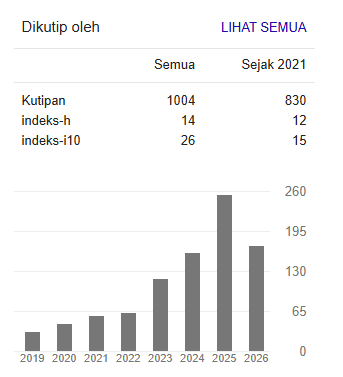
Google Scholar Citations
Journal Tools


Current Issue


Information
MAPS