Evaluation Progress Scopus


Editorial Procedures and Peer-Review Process
Kanz Philosophia: A Journal for Islamic Philosophy and Mysticism applies a rigorous editorial and peer-review process to ensure that all published manuscripts meet academic standards and contribute to the development of philosophical, Islamic philosophical, and mystical studies. All manuscripts submitted through the Open Journal System (OJS) undergo several stages of evaluation, including initial editorial assessment, peer review, revision, editing, and publication.
All manuscripts submitted to Kanz Philosophia: A Journal for Islamic Philosophy and Mysticism are initially examined by the Editor-in-Chief or an assigned Section Editor/Handling Editor.
The Editor-in-Chief may handle the manuscript directly or assign a Section Editor/Handling Editor to manage the editorial process. At this stage, the editor evaluates whether the manuscript:
The initial assessment focuses on the relevance, academic quality, and suitability of the manuscript for further review.
Manuscripts that do not meet the journal's focus and scope, submission requirements, ethical standards, or basic academic criteria may be rejected at this stage without being sent for external peer review (desk rejection).
Manuscripts that pass the initial editorial assessment are assigned by the Editor-in-Chief or the assigned Section Editor/Handling Editor to two independent reviewers through a double-blind peer-review process, in which the identities of authors and reviewers remain confidential.
Each manuscript submitted to Kanz Philosophia: A Journal for Islamic Philosophy and Mysticism is evaluated by two reviewers with relevant expertise appropriate to the topic, theoretical approach, methodology, and intellectual tradition discussed in the manuscript.
Reviewers are selected based on their academic competence and should be independent from the journal's editorial team and have no conflicts of interest with the authors or the submitted manuscript.
Reviewers evaluate manuscripts based on the following aspects:
Reviewers are expected to assess the quality and eligibility of manuscripts for publication in Kanz Philosophia: A Journal for Islamic Philosophy and Mysticism. In particular, reviewers should examine whether the title, content, methodology, theoretical framework, or discussion demonstrates meaningful engagement with philosophical perspectives, Islamic philosophy, mysticism, or related Islamic intellectual traditions.
Reviewers should not focus primarily on minor technical issues such as typographical errors, spelling mistakes, or formatting problems, unless these issues significantly affect the clarity and academic quality of the manuscript.
The reviewers' recommendations provide important input for editorial decisions; however, the final decision regarding publication remains the responsibility of the Editor-in-Chief or assigned editor based on the reviewers' evaluations and the journal's editorial policies.
Estimated time: 4–6 weeks
After receiving the reviewers' reports, the editor evaluates the manuscript based on the reviewers' recommendations and the editor's independent academic judgment.
The possible editorial decisions are:
The manuscript meets the journal's academic standards and is accepted for publication without substantial revision.
The manuscript is considered suitable for publication but requires limited revisions based on reviewers' comments. The revised manuscript will be evaluated by the editor before final acceptance.
The manuscript has academic potential but requires substantial improvement. Authors are required to revise the manuscript and provide responses to reviewers' comments. When necessary, the editor may request additional evaluation from reviewers, particularly for manuscripts requiring substantial revision or further academic assessment.
The manuscript is rejected because it does not meet academic standards, lacks sufficient originality or scholarly contribution, does not adequately address reviewer concerns, or falls outside the focus and scope of the journal.
When reviewers provide different recommendations, the editor will make the final decision based on the overall academic quality of the manuscript, reviewer evaluations, and the journal's editorial policies. The editor may request further review, additional clarification, revision, or make an independent editorial decision.
Authors are required to revise their manuscripts according to the reviewers' comments and submit the revised version through OJS.
The editor evaluates the revised manuscript by considering whether the authors have adequately addressed the reviewers' comments and whether the revisions have improved the scholarly quality of the manuscript.
Based on the evaluation of the revised manuscript, the editor may:
After final acceptance, manuscripts proceed to the production stage, including copyediting, proofreading, layout preparation, and final publication.
The editorial team ensures that published articles comply with the journal's academic, ethical, and formatting standards.
The duration of the editorial process varies depending on reviewer availability, the complexity of the manuscript, revision requirements, and editorial processing. Generally, the publication process takes approximately 10–14 weeks.
All manuscripts submitted to Kanz Philosophia: A Journal for Islamic Philosophy and Mysticism are treated as confidential documents. Reviewers must not disclose, reproduce, or use any information obtained during the review process for personal or professional advantage.
Reviewers should decline the review assignment if they have any potential conflict of interest, including personal relationships, institutional affiliations, recent collaboration with the authors, or other circumstances that may affect their objectivity.
Evaluation Progress Scopus
CITEDNESS IN SCOPUS

Sinta

Article Template

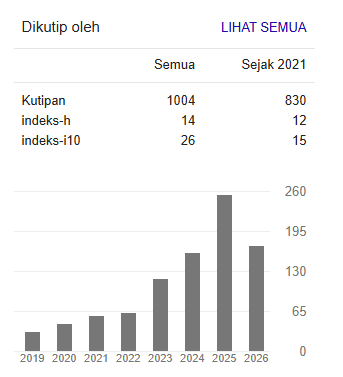
Google Scholar Citations
Journal Tools


MAPS