Evaluation Progress Scopus


Kanz Philosophia: A Journal for Islamic Philosophy and Mysticism is committed to maintaining the integrity, accuracy, and reliability of the scholarly record. When errors, academic misconduct, or other serious concerns are identified, the journal will take appropriate corrective action based on the nature and seriousness of the issue.
Withdrawal applies to a manuscript that has not yet been published as an official journal article.
Authors who wish to withdraw a submitted manuscript should communicate with the editorial office and provide a clear reason for the withdrawal. Withdrawal requests will be considered by the editorial team in accordance with the stage of the editorial process and the circumstances of the request.
The journal may also withdraw a manuscript before publication when serious concerns are identified, including concerns relating to plagiarism, fabrication, falsification, authorship, duplicate submission, or other violations of academic integrity.
Withdrawal of a manuscript is distinct from retraction. Retraction applies to an article that has already been officially published.
A published article may be retracted when there is sufficient evidence of a serious problem that affects the reliability of its data, findings, or conclusions.
Grounds for retraction may include, but are not limited to:
Before a retraction decision is made, the journal may conduct a preliminary assessment, seek clarification from the author(s) and relevant parties, and undertake further investigation where necessary.
The final decision to retract an article is made by the editorial team based on the available evidence and in accordance with the journal's publication ethics policies.
When an article is retracted, Kanz Philosophia will publish a clear and openly accessible retraction notice.
The retraction notice will:
The retraction notice will be electronically linked to the original article.
A retracted article will not be removed from the journal website or digital archive.
Instead, the article will remain accessible and will be clearly identified as RETRACTED on the article's webpage and in the full-text document. Where applicable, the article's DOI and associated metadata will also be updated to reflect its retracted status.
This approach ensures transparency and preserves the integrity and history of the scholarly record.
A published article may be corrected when an error is identified but the error does not invalidate the principal findings or conclusions of the article.
Corrections may take the following forms:
Erratum
An erratum is issued for an important error introduced during the publication or production process.
Corrigendum
A corrigendum is issued for an important error originating from the author(s).
Addendum
An addendum may be published when additional information is necessary to clarify or supplement the published article without contradicting the original publication.
The editorial team determines whether a correction is appropriate based on the significance of the error and its impact on the published scholarly record.
Corrections, retractions, and other notices concerning published articles will be clearly identified and linked to the original publication.
Where applicable, such notices will:
Where substantial concerns regarding the reliability or integrity of a published article exist but a final determination cannot yet be made, the Editor-in-Chief may issue an Expression of Concern.
An Expression of Concern may be considered, for example, when an investigation is ongoing, relevant evidence is inconclusive, or an appropriate institutional investigation has not yet been completed.
The notice will explain the reason for the concern and will be linked to the original article. When sufficient evidence becomes available, the journal may subsequently issue a correction, retraction, or other appropriate editorial notice.
Kanz Philosophia is committed to responding to errors and academic integrity concerns in a timely, transparent, and documented manner.
Corrective actions are intended to protect the accuracy and reliability of the scholarly record rather than to serve as punitive measures. The type of action taken will be proportionate to the nature and seriousness of the issue.
Evaluation Progress Scopus
CITEDNESS IN SCOPUS

Sinta

Article Template

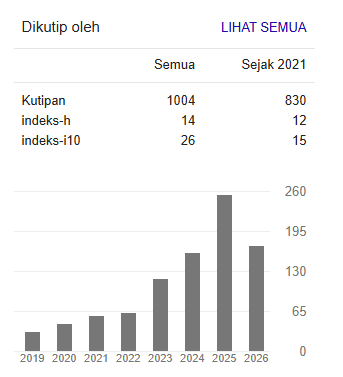
Google Scholar Citations
Journal Tools


MAPS