Naquib al-Attas’s Philosophy in Pesantren Learning
Implications for Gen X Motivation to Provide Higher Education for Their Children
DOI:
https://doi.org/10.20871/kpjipm.v12i1.601Keywords:
Generation X, Islamic Boarding School Learning, Islamic Educational Philosophy, Syed Muhammad Naquib al-AttasAbstract
This study aims to reconstruct the concept of Islamic educational philosophy from the perspective of Syed Muhammad Naquib al-Attas and to analyze its implications for the motivation of Generation X parents to continue their children’s education through higher education. This study employs a qualitative approach with a phenomenological design, utilizing in-depth interviews and participatory observation within a Muslim community rooted in the pesantren tradition in the mountainous region of Batang Regency, Central Java. Research findings indicate that educational and religious practices in Islamic boarding schools reflect the concept of ta’dīb (religious guidance), the integration of knowledge and faith, and an awareness of the Islamic worldview as developed by Syed Muhammad Naquib al-Attas. Collective traditions such as the study of Iḥyā’ ‘Ulūm al-Dīn (Islamic teachings), bahtsul masail (religious discourses), manaqiban (religious recitation), and khataman (religious recitation) shape the spiritual orientation of underprivileged communities, allowing religion to be understood not merely as a ritual but as a source of serenity, social solidarity, and resilience. The attitude of nrimo (respect for God), accompanied by effort, gratitude, and mutual support, demonstrates the internalization of adab (good manners) in daily life, particularly in respect for knowledge, scholars, and education. This awareness is also evident in the motivation of parents who continue to strive to send their children to Islamic universities despite facing economic constraints. They understand education as a continuous charity, a path of worship, and a means of developing civilized individuals with a future orientation and moral responsibility. The choice of sharia, da‘wah, and Islamic education demonstrates the belief that knowledge must bring blessings and social benefits. This finding challenges the habits of modern society which views happiness through material accumulation, but through inner peace, strengthening of faith, and the pursuit of knowledge as a spiritual path to God’s pleasure.
Downloads
References
Ahmad, Kamaruzzaman Bustamam. 2025. Syed Muhammad Naquib Al-Attas and the Future of Metaphysical Thought: Reclaiming the Unity of Knowledge in an Age of Confusion. Kba13 Insight.
Ahmed, Farah. 2018. “An Exploration of Naquib Al-Attas’ Theory of Islamic Education as Ta’dīb as an ‘Indigenous’ Educational Philosophy.” Educational Philosophy and Theory 50 (8): 786–94. https://doi.org/10.1080/00131857.2016.1247685.
Arif, Muhamad Rayhan Al-, Choirunnajih Hadanil Alqo, Muhamad Aufa Ulinnuha, M. Rikza Chamami, and Muhammad Imran Musthofa. 2026. “School Infrastructure Inequality and the Reproduction of Educational Disadvantage: A Bourdieusian Analysis of Cultural Capital Formation in Marginalized Regions.” Journal of Islamic Education Thought and Development 2 (01): 42–59. https://doi.org/10.67046/jietd.v2i01.77.
Attas, Syed Muhammad Al-Naquib Al-. 1981. Islam dan Sekularisme. Translated by Karsijo Djojosuwarno. Penerbit Pustaka.
Attas, Syed Muhammad Al-Naquib Al-. 1994. Konsep Pendidikan dalam Islam: Suatu Rangka Pikir ke Arah Pembinaan Filsafat Pendidikan Islam. Translated by Haidar Bagir. Mizan.
Arifin, Muhammad Husni. 2025. “The Role of Higher Education in Promoting Social Mobility in Indonesia.” European Journal of Social Science Education and Research 12 (1): 25–37. https://doi.org/10.26417/6edwqh94.
Azra, Azyumardi. 2013. “Distinguishing Indonesian Islam: Some Lessons to Learn.” In Islam in Indonesia: Contrasting Images and Interpretations, edited by Jajat Burhanudin and Kees van Dijk. Amsterdam University Press.
Baharuddin, Refika Allya Arianti, Muhammad Ihwal, Makkulau, Lilis Laome, and Andi Tenri Ampa. 2025. “Pemodelan Regresi Berganda pada Jumlah Penduduk Miskin di Indonesia.” Arus Jurnal Sains dan Teknologi 3 (1): 148–56. https://doi.org/10.57250/ajst.v3i1.1445.
Bansal, Gaurav. 2026. “Reading Agrarian Transformation through Literature: Moral Economy, Political Economy, and Caste in 1950s Punjab in Gurdial Singh’s Marhi Da Deeva.” Sikh Formations 0 (0): 1–10. https://doi.org/10.1080/17448727.2025.2610902.
Barrett, David, and Alison Twycross. 2018. “Data Collection in Qualitative Research.” Research Made Simple. Evidence-Based Nursing 21 (3): 63–64. https://doi.org/10.1136/eb-2018-102939.
Basis, Najwa, Lital Keinan Boker, and Tamar Shochat. 2025. “Religiosity, Religious Orientation, and a Good Night’s Sleep: The Role of Anxiety and Depression.” Journal of Sleep Research 34 (5): e70055. https://doi.org/10.1111/jsr.70055.
Ferraro, Tânia, João Manuel Moreira, Nuno Rebelo dos Santos, Leonor Pais, and Clemens Sedmak. 2018. “Decent Work, Work Motivation and Psychological Capital: An Empirical Research.” WORK 60 (2): 339–54. https://doi.org/10.3233/wor-182732.
Geertz, Clifford. 1960. “The Javanese Kijaji: The Changing Role of a Cultural Broker.” Comparative Studies in Society and History 2 (2): 228–49. https://doi.org/10.1017/s0010417500000670.
Gill, Michael. 2020. “Phenomenology as Qualitative Methodology.” In Qualitative Analysis: Eight Approaches for the Social Sciences, edited by Margaretha Järvinen and Nanna Mik-Meyer. SAGE Publications Ltd.
Hasmin, Hasmin, Jumiaty Nurung, and Gunawan Bata Ilyas. 2025. “Religious-Based Family Management and Its Impact on Consumption Patterns and Poverty: A Human Resource and Management Perspective.” Economies 13 (3): 70. https://doi.org/10.3390/economies13030070.
Hidayat, Muhtar, and Mulyanto Mulyanto. 2023. “Konsep Ta’dib Menurut Naquib Al-Attas dalam Pendidikan Islam.” TSAQOFAH 4 (2): 865–78. https://doi.org/10.58578/tsaqofah.v4i2.2414.
Hidayatullah, Elit Ave, and Syamsuddin Arif. 2022. “Syed Muhammad Naquib Al-Attas’ Exposition on the Concept of Ethics.” Afkar: Jurnal Akidah Dan Pemikiran Islam 24 (1): 409–46. https://doi.org/10.22452/afkar.vol24no1.12.
Iman, Hafidz. 2025. “Religion and Politics in The Framework of Secularism: A Philosophical Dialogue Between Charles Taylor and Syed M. Naquib Al-Attas.” Indonesian Journal of Interdisciplinary Islamic Studies (IJIIS) 8 (1): 75–102. https://doi.org/10.20885/ijiis.vol8.iss1.art4.
Imran, Amina, and Rosman Md Yusoff. 2015. “Empirical Validation of Qualitative Data: A Mixed Method Approach.” International Journal of Economics and Financial Issues 5 (1S): 389–96.
Jaelani, Randa, and Muhammad Faqih Nidzom. 2026. “Al-Attas on Ta’dib and Its Relevance in Realizing the Stability of Global Society.” Dirosatuna: Journal of Islamic Studies 9 (1): 1–15.
Khasanah, Siti Uswatun. 2022. “Nahdlatul Ulama Da’wah Dynamics: Socio-Cultural Change and Disruption.” KOMUNIKA: Jurnal Dakwah Dan Komunikasi 16 (2): 183–99. https://doi.org/10.24090/komunika.v16i2.6810.
Khotimah, Siti Nur Khusnul, and Anita Dewi Laksono. 2026. “Qur’an Literacy Crisis in Alpha Generation in Rural Indonesia: A Case Study of Social, Digital, and Family Factors.” Journal of Islamic Education Thought and Development 2 (01): 60–75. https://doi.org/10.67046/jietd.v2i01.72.
Kosim, Muhammad, Martin Kustati, and Murkilim Murkilim. 2021. “Syed Muhammad Naquib Al-Attas’ Ideas onthe Islamization of Knowledge and Its Relevance with Islamic Education in Indonesia.” MIQOT: Jurnal Ilmu-ilmu Keislaman 44 (2): 250–67. Penelitian kepustakaan. https://doi.org/10.30821/miqot.v44i2.724.
Lew, Bob, David Lester, Kairi Kõlves, et al. 2022. “An Analysis of Age-Standardized Suicide Rates in Muslim-Majority Countries in 2000-2019.” BMC Public Health 22 (1): 882. https://doi.org/10.1186/s12889-022-13101-3.
Lusiani, Lusiani, Andi Hendrawan, and Gaudensius Nong Yosep P. 2023. “Gambaran Motivasi Dari Orang Tua Kepada Anak Untuk Melanjutkan Pendidikan Tinggi Sebagai Bentuk Kontribusi Pemberdayaan Potensi Daerah.” Winco 4 (1): 154–64. https://doi.org/10.56655/winco.v4i1.202.
Mantha, SandhyaRani, and P. Vamsi Krishna. 2024. “A Literature Review of Learning Preferences, Motivational Factors and Training Needs Among Different Generations of Baby Boomers, Gen X, Gen Y and Gen Z Students and Professionals.” Education and Society 48 (1): 53–64.
Miles, Matthew B., A. Michael Huberman, and Johnny Saldana. 2014. Qualitative Data Analysis. SAGE.
Mohamed, Alwy Ahmed, M. Abdur Rozaq, Muhammad Ndow, and Mohd Rab. 2025. “Adab as the Epistemological Foundation of Islamic Education: A Study of Syed Naquib al-Attas.” Journal of World Thinkers 2 (02): 83–98.
Momen, Abdul, and Muhammad Ahsan Ullah. 2025. “The Theory of Islamization of Knowledge: A Comprehensive Review of Historical Progress, Objectives, and Implementation Process.” Jagannath University Journal of Arts 15 (1): 160–75. https://doi.org/10.3329/jnujarts.v15i1.87827.
Muhaimin, Zaki Abdul, and Ali Zainal Abidin. 2025. “Education and Civilisational Worldviews: A Comparative Study of Syed Muhammad Naquib al-Attas and John Dewey.” Indonesian Journal of Islamization Studies 3 (1): 96–111.
Mundiri, Akmal, Uswatun Hasanah, and Hasan Baharun. 2022. “The Mindful Parenting of Kyai in Pesantren.” AL-ISHLAH: Jurnal Pendidikan 14 (1): 469–78. https://doi.org/10.35445/alishlah.v14i1.1331.
Musa, Mohd Faizal. 2021. Naquib Al-Attas’ Islamization of Knowledge: Its Impact on Malay Religious Life, Literature, Language and Culture. ISEAS – Yusof Ishak Institute.
Nadia, Ghina, Achmad Khudori Soleh, and Aunul Hakim. 2025. “The Concept of Ta’dib Syed Muhammad Naquib al-Attas in Children’s Moral Education: A Family-Based Philosophical Study.” Al-Ishlah: Jurnal Pendidikan Islam 23 (2): 82–92. https://doi.org/10.35905/alishlah.v23i2.14708.
Nurhasanah, Salsabila, Nur Hidayahtul Wakhidah, Aminatul Mukhlisa, and M. Yunus Abu Bakar. 2026. “Filsafat dan Jiwa Pendidikan dalam Perspektif Tiga Ulama Besar : Tradisional, Modern, dan Integritas.” Journal Sains Student Research 4 (1): 120–34. https://doi.org/10.61722/jssr.v4i1.7535.
Nuryanti, Makhfira, and Lukman Hakim. 2020. “Pemikiran Islam Modern Syed Muhammad Naquib Al-Attas.” Substantia: Jurnal Ilmu-Ilmu Ushuluddin 22 (1): 73–84. https://doi.org/10.22373/substantia.v22i1.5531.
Rodin, Rhoni. 2013. “Tradisi Tahlilan dan Yasinan.” IBDA` : Jurnal Kajian Islam dan Budaya 11 (1): 76–87. https://doi.org/10.24090/ibda.v11i1.69.
Sabila, Dwi Cinta Nur, Desylia Widyasari, Ismail Ismail, and Zainudin Hasan. 2026. “Student Obedience and Spiritual Well-Being in Islamic Education: Exploring the Role of Adab in Teacher–Student Relationships.” Journal of Islamic Education Thought and Development 2 (01): 1–19. https://doi.org/10.67046/jietd.v2i01.81.
Septoyadi, Zikry, and Akbar Akbar. 2023. “The Concept of Ta’dib According to An-Naquib Al-Attas And Humanism According to Paulo Freire and Their Relevance with Islamic Education.” Al-Abshar: Journal of Islamic Education Management 2 (1): 1–25. https://doi.org/10.58223/al-abshar.v2i1.66.
Seubert, Christian, Lisa Hopfgartner, and Jürgen Glaser. 2021. “Living Wages, Decent Work, and Need Satisfaction: An Integrated Perspective.” European Journal of Work and Organizational Psychology 30 (6): 808–23. https://doi.org/10.1080/1359432x.2021.1966094.
Sukandi, Enjang, and Siti Nia Anisa Inayah. 2024. “Naquib Al-Attas Educational Thought in Contemporary Islamic Education.” Al-Afkar, Journal For Islamic Studies 7 (4): 831–42. https://doi.org/10.31943/afkarjournal.v7i4.303.
Xavier, Marlon, Julio Meneses, and Patricia Jantsch Fiuza. 2026. “Dropout, Stopout, and Time Challenges in Open Online Higher Education: A Qualitative Study of the First-Year Student Experience.” Open Learning: The Journal of Open, Distance and e-Learning 41 (1): 24–40. https://doi.org/10.1080/02680513.2022.2160236.
Yulianti, K., E. J. P. G. Denessen, and W. Droop. 2018. “The Effects of Parental Involvement on Children’s Education: A Study in Elementary Schools in Indonesia.” International Journal About Parents in Education 10 (1): 14–32.
Downloads
Published
How to Cite
Issue
Section
License
Copyright (c) 2026 Ridwan Ridwan, Nasikhin Nasikhin, Zainudin Hasan

This work is licensed under a Creative Commons Attribution 4.0 International License.


Evaluation Progress Scopus

CITEDNESS IN SCOPUS
Sinta

Article Template

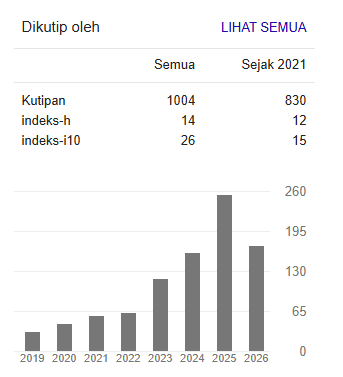
Google Scholar Citations
Journal Tools


Current Issue


Information
MAPS