Epistemological Peacebuilding in Mohammed Arkoun’s Dialogical Ethics
From Closed Reason to Open Reason
DOI:
https://doi.org/10.20871/kpjipm.v12i1.597Keywords:
Epistemological Peacebuilding, Interpretive Authority, La Raison Ouverte, Mohammed Arkoun, Religious ConflictAbstract
Religious conflict in plural societies is often addressed through value-based approaches that emphasize tolerance, harmony, and moderation. However, these approaches do not sufficiently explain the epistemological structures through which religious truth is produced, authorized, circulated, and defended. This research reconstructs an epistemological peacebuilding model from the perspective of an Islamic philosopher, namely Mohammed Arkoun, by examining how reasoning closed religious reasoning generates exclusion and how open reason can support dialogical peace. The study applies a qualitative critical-philosophical method with a historical-hermeneutic orientation to Arkoun’s major works, especially Critique of Islamic Reason, The Unthought in Contemporary Islamic Thought, and Rethinking Islam. The analysis focuses on la raison close, la raison ouverte, l’impensé, orthodoxy, and interpretive authority. The analysis shows that religious conflict becomes epistemological when interpretive authority is monopolized, inherited interpretations are treated as final truth, and alternative voices are excluded from legitimate discourse. Conversely, la raison ouverte enables peacebuilding by reopening religious reasoning to historical critique, epistemic humility, dialogical recognition, and ethical public reasoning. This article proposes an epistemological peacebuilding model comprising the diagnosis of closed reason, the deconstruction of absolute claims, and the dialogical construction through open reason. Peacebuilding should therefore be understood not merely as a moral appeal or a procedural conflict-resolution technique, but as a transformation of the epistemic conditions that shape religious truth, authority, and recognition in plural societies.
Downloads
References
Abid, Abubakar, Maheen Farooqi, and James Zou. 2021. “Large Language Models Associate Muslims with Violence.” Nature Machine Intelligence 3: 461–63. https://doi.org/10.1038/s42256-021-00359-2.
Acerbi, A. 2020. “Cognitive Attraction and Online Misinformation.” Palgrave Communications 5 (1): 15. https://doi.org/10.1057/s41599-019-0224-y.
Adelman, Levi, Maykel Verkuyten, and Kumar Yogeeswaran. 2022. “Distinguishing Active and Passive Outgroup Tolerance: Understanding Its Prevalence and the Role of Moral Concern.” Political Psychology 43 (4): 731–50. https://doi.org/10.1111/pops.12790.
Arkoun, M. 1984a. “Comment Étudier La Pensée Islamique?” In Pour Une Critique de La Raison Islamique. Maisonneuve et Larose.
Arkoun, Mohammed. 1984b. “Le Concept de Raison Islamique.” In Pour Une Critique de La Raison Islamique. Maisonneuve et Larose.
Arkoun, Mohammed. 1984c. “Les Sciences Humaines et La Pensée Islamique.” In Pour Une Critique de La Raison Islamique. Maisonneuve et Larose.
Arkoun, Mohammed. 1994a. “Authority.” In Rethinking Islam: Common Questions, Uncommon Answers, edited by Robert D. Lee. Westview Press.
Arkoun, Mohammed. 1994b. Rethinking Islam: Common Questions, Uncommon Answers. Edited by Robert D. Lee. Westview Press.
Arkoun, Mohammed. 2002a. “Authority and Power in Islamic Thought.” In The Unthought in Contemporary Islamic Thought. Saqi Books.
Arkoun, Mohammed. 2002b. “Thinking the Unthinkable and the Unthought in Contemporary Islamic Thought.” In The Unthought in Contemporary Islamic Thought. Saqi Books.
Astor, Avi, and Damon Mayrl. 2020. “Culturalized Religion: A Synthetic Review and Agenda for Research.” Journal for the Scientific Study of Religion 59 (2): 209–26. https://doi.org/10.1111/jssr.12661.
Bacevic, Jana. 2023. “Epistemic Injustice and Epistemic Positioning: Towards an Intersectional Political Economy.” Current Sociology 71 (6): 1122–40. https://doi.org/10.1177/00113921211057609.
Bail, Christopher A., Brian Guay, Emily Maloney, et al. 2020. “Assessing the Russian Internet Research Agency’s Impact on the Political Attitudes and Behaviors of American Twitter Users in Late 2017.” Proceedings of the National Academy of Sciences 117 (1): 243–50. https://doi.org/10.1073/pnas.1906420116.
Bak-Coleman, Joseph B., Mark Alfano, Wolfram Barfuss, et al. 2021. “Stewardship of Global Collective Behavior.” Proceedings of the National Academy of Sciences 118 (27): 1–10. https://doi.org/10.1073/pnas.2025764118.
Berman, Ron, and Zsolt Katona. 2020. “Curation Algorithms and Filter Bubbles in Social Networks.” Marketing Science 39 (2): 296–316. https://doi.org/10.1287/mksc.2019.1208.
Bilewicz, Michał, and Wiktor Soral. 2020. “Hate Speech Epidemic: The Dynamic Effects of Derogatory Language on Intergroup Relations and Political Radicalization.” Political Psychology 41 (S1): 3–33. https://doi.org/10.1111/pops.12670.
Billerbeck, Sarah von, Katharina P. Coleman, Steffen Eckhard, and Benjamin Zyla. 2024. “Local Knowledges in International Peacebuilding: Acquisition, Filtering, and Systematic Bias.” International Studies Review 26 (4): viae047. https://doi.org/10.1093/isr/viae047.
Boulianne, Shelley. 2020. “Twenty Years of Digital Media Effects on Civic and Political Participation.” Communication Research 47 (7): 947–66. https://doi.org/10.1177/0093650218808186.
Brady, William J., M. J. Crockett, and Jay J. Van Bavel. 2020. “The MAD Model of Moral Contagion: The Role of Motivation, Attention, and Design in the Spread of Moralized Content Online.” Perspectives on Psychological Science 15 (4): 978–1010. https://doi.org/10.1177/1745691620917336.
Campbell, Heidi A, and Giulia Evolvi. 2020. “Contextualizing Current Digital Religion Research on Emerging Technologies.” Human Behavior and Emerging Technologies 2 (1): 5–17. https://doi.org/10.1002/hbe2.149.
Cinelli, Matteo, Gianmarco De Francisci Morales, Alessandro Galeazzi, Walter Quattrociocchi, and Michele Starnini. 2021. “The Echo Chamber Effect on Social Media.” Proceedings of the National Academy of Sciences 118 (9): 1–8. https://doi.org/10.1073/pnas.2023301118.
DellaPosta, Daniel. 2020. “Pluralistic Collapse: The ‘Oil Spill’ Model of Mass Opinion Polarization.” American Sociological Review 85 (3): 507–36. https://doi.org/10.1177/0003122420922989.
Devine, Daniel, Jennifer Gaskell, Will Jennings, and Gerry Stoker. 2021. “Trust and the Coronavirus Pandemic: What Are the Consequences of and for Trust? An Early Review of the Literature.” Political Studies Review 19 (2): 274–85. https://doi.org/10.1177/1478929920948684.
Douglas, Karen M. 2021. “COVID-19 Conspiracy Theories.” Group Processes & Intergroup Relations 24 (2): 270–75. https://doi.org/10.1177/1368430220982068.
Ecker, Ullrich K. H., Stephan Lewandowsky, John Cook, et al. 2022. “The Psychological Drivers of Misinformation Belief and Its Resistance to Correction.” Nature Reviews Psychology 1: 13–29. https://doi.org/10.1038/s44159-021-00006-y.
Farahat, Omar. 2021. “Authority and Normativity in Islamic Legal Thought.” Journal of Law and Religion 36 (1): 5–28.
Fauzan, and Ahmad Khoirul Fata. 2020. “Deconstructing the Concept of Jihad by the Radical Islamic Movements.” November 13, 253–57. https://doi.org/10.2991/assehr.k.201113.048.
Febrian, Harry. 2024. “Visualizing Authority: Rise of the Religious Influencers on the Instagram.” Social Media + Society 10 (4): 1–19. https://doi.org/10.1177/20563051241286850.
Finkel, Eli J., Christopher A. Bail, Mina Cikara, et al. 2020. “Political Sectarianism in America.” Science 370 (6516): 533–36. https://doi.org/10.1126/science.abe1715.
Freelon, Deen, and Chris Wells. 2020. “Disinformation as Political Communication.” Political Communication 37 (2): 145–56. https://doi.org/10.1080/10584609.2020.1723755.
Goldenberg, Amit, and James J. Gross. 2020. “Digital Emotion Contagion.” Trends in Cognitive Sciences 24 (4): 316–28. https://doi.org/10.1016/j.tics.2020.01.009.
Grimes, David Robert. 2020. “Health Disinformation and Social Media: The Crucial Role of Information Hygiene in Mitigating Conspiracy Theory and Infodemics.” EMBO Reports 21 (11): 1–4. https://doi.org/10.15252/embr.202051819.
Guess, Andrew M., Neil Malhotra, Jennifer Pan, et al. 2023. “How Do Social Media Feed Algorithms Affect Attitudes and Behavior in an Election Campaign?” Science 381 (6656): 398–404. https://doi.org/10.1126/science.abp9364.
Guess, Andrew M., Brendan Nyhan, and Jason Reifler. 2020. “Exposure to Untrustworthy Websites in the 2016 US Election.” Nature Human Behaviour 4: 472–80. https://doi.org/10.1038/s41562-020-0833-x.
Huszár, Ferenc, Sofia Ira Ktena, Conor O’Brien, Luca Belli, Andrew Schlaikjer, and Moritz Hardt. 2022. “Algorithmic Amplification of Politics on Twitter.” Proceedings of the National Academy of Sciences 119 (1): 1–6. https://doi.org/10.1073/pnas.2025334119.
Izzuddin, and Ahmad Khoirul Fata. 2020. “Realizing the Religion as the Source of Harmony in a Multicultural Society.” Kontemplasi: Jurnal Ilmu-Ilmu Ushuluddin 8 (2): 171–202. https://doi.org/10.21274/kontem.2020.8.2.171-202.
Kango, Andries, Muh Taufiq Syam, Mahmuddin, and Ahmad Khoirul Fata. 2024. “Dari Ulama Ke Internet: Transformasi Dakwah di Zaman Kiwari.” Farabi 21 (2): 97–113. https://doi.org/10.30603/jf.v21i2.5147.
Kasno, Nazar Husain Hadi Pranata Wibawa, and Ahmad Khoirul Fata. 2023. “From God to Humanity: Reconstruction of Islamic Theology in Contemporary Era.” Journal of Dharma 48 (4): 429–48.
Khamdan, Muh., Ahmad Khoirul Fata, Sunandar Macpal, and Kartini Kamaruzzaman. 2025. “Social Media and Political Mobilization in General Elections in Indonesia.” Tapis: Teropong Aspirasi Politik Islam 21 (1): 211–57. https://doi.org/https://doi.org/10.24042/w6cb0n28.
Kozyreva, Anastasia, Stephan Lewandowsky, and Ralph Hertwig. 2020. “Citizens versus the Internet: Confronting Digital Challenges with Cognitive Tools.” Psychological Science in the Public Interest 21 (3): 103–56. https://doi.org/10.1177/1529100620946707.
Kubin, Emily, and Christian von Sikorski. 2021. “The Role of Social Media in Political Polarization: A Systematic Review.” Annals of the International Communication Association 45 (3): 188–206. https://doi.org/10.1080/23808985.2021.1976070.
Levy, Ro’ee. 2021. “Social Media, News Consumption, and Polarization: Evidence from a Field Experiment.” American Economic Review 111 (3): 831–70. https://doi.org/10.1257/aer.20191777.
Linden, Sander van der. 2022. “Misinformation: Susceptibility, Spread, and Interventions to Immunize the Public.” Nature Medicine 28: 460–67. https://doi.org/10.1038/s41591-022-01713-6.
Lorenz-Spreen, Philipp, Lisa Oswald, Stephan Lewandowsky, and Ralph Hertwig. 2023. “A Systematic Review of Worldwide Causal and Correlational Evidence on Digital Media and Democracy.” Nature Human Behaviour 7: 74–101. https://doi.org/10.1038/s41562-022-01460-1.
Mernyk, Joseph S., Sophia L. Pink, James N. Druckman, and Robb Willer. 2022. “Correcting Inaccurate Metaperceptions Reduces Americans’ Support for Partisan Violence.” Proceedings of the National Academy of Sciences 119 (16): 1–9. https://doi.org/10.1073/pnas.2116851119.
Milli, Smitha, Micah Carroll, Yike Wang, Sashrika Pandey, Sebastian Zhao, and Anca D. Dragan. 2023. “Engagement, User Satisfaction, and the Amplification of Divisive Content on Social Media.” PNAS Nexus 2 (11): 1–10. https://doi.org/10.1093/pnasnexus/pgad354.
Mosleh, Mohsen, and David G. Rand. 2022. “Measuring Exposure to Misinformation from Political Elites on Twitter.” Nature Communications 13 (7144): 1–9. https://doi.org/10.1038/s41467-022-34769-6.
Muhtar, Fathurrahman. 2023. “Toward Religious Moderation: Mohammed Arkoun’s and Hasan Hanafi’s Perspectives on Indonesian Wasatiyah Islam.” MIQOT: Jurnal Ilmu-Ilmu Keislaman 47 (2): 204–21. https://doi.org/http://dx.doi.org/10.30821/miqot.v47i2.1119.
Najib, Muhammad Ainun, and Ahmad Khoirul Fata. 2020. “Islam Wasatiyah dan Kontestasi Wacana Moderatisme Islam di Indonesia.” Theologia 31 (1): 115–38. https://doi.org/https://doi.org/10.21580/teo.2020.31.1.5764.
Nguyen, C. Thi. 2020. “Echo Chambers and Epistemic Bubbles.” Episteme 17 (2): 141–61. https://doi.org/10.1017/epi.2018.32.
Osmundsen, Mathias, Alexander Bor, Peter Bjerregaard Vahlstrup, Anja Bechmann, and Michael Bang Petersen. 2021. “Partisan Polarization Is the Primary Psychological Motivation behind Political Fake News Sharing on Twitter.” American Political Science Review 115 (3): 999–1015. https://doi.org/10.1017/S0003055421000290.
Pennycook, Gordon, Ziv Epstein, Mohsen Mosleh, Antonio A. Arechar, Dean Eckles, and David G. Rand. 2021. “Shifting Attention to Accuracy Can Reduce Misinformation Online.” Nature 592: 590–95. https://doi.org/10.1038/s41586-021-03344-2.
Pennycook, Gordon, Jonathon McPhetres, Yunhao Zhang, Jackson G. Lu, and David G. Rand. 2020. “Fighting COVID-19 Misinformation on Social Media: Experimental Evidence for a Scalable Accuracy-Nudge Intervention.” Psychological Science 31 (7): 770–80. https://doi.org/10.1177/0956797620939054.
Pennycook, Gordon, and David G. Rand. 2021. “The Psychology of Fake News.” Trends in Cognitive Sciences 25 (5): 388–402. https://doi.org/10.1016/j.tics.2021.02.007.
Rathje, Steve, Jay J. Van Bavel, and Sander van der Linden. 2021. “Out-Group Animosity Drives Engagement on Social Media.” Proceedings of the National Academy of Sciences 118 (26): 1–9. https://doi.org/10.1073/pnas.2024292118.
Robertson, Ronald E., Jon Green, Damian J. Ruck, Katherine Ognyanova, Christo Wilson, and David Lazer. 2023. “Users Choose to Engage with More Partisan News than They Are Exposed to on Google Search.” Nature 618: 342–48. https://doi.org/10.1038/s41586-023-06078-5.
Roozenbeek, Jon, Sander van der Linden, Beth Goldberg, Steve Rathje, and Stephan Lewandowsky. 2022. “Psychological Inoculation Improves Resilience against Misinformation on Social Media.” Science Advances 8 (34): 1–11. https://doi.org/10.1126/sciadv.abo6254.
Rowatt, Wade C, and Rosemary L Al-Kire. 2021. “Dimensions of Religiousness and Their Connection to Racial, Ethnic, and Atheist Prejudices.” Current Opinion in Psychology 40: 86–91. https://doi.org/10.1016/j.copsyc.2020.08.022.
Sandberg, Sveinung, and Sarah Colvin. 2020. “‘ISIS Is Not Islam’: Epistemic Injustice, Everyday Religion, and Young Muslims’ Narrative Resistance.” British Journal of Criminology 60 (6): 1585–1605. https://doi.org/10.1093/bjc/azaa035.
Sopyan, Imam, Pepen Irpan Fauzan, and Ahmad Khoirul Fata. 2021. “Religious Harmony, Godly Nationalism, and the Limits of State-Sponsored Interreligious Dialogue Agenda in Indonesia.” Islamika Inside: Jurnal Keislaman dan Humaniora 6 (2): 31–53. https://doi.org/10.35719/islamikainside.v6i2.113.
Tokita, Christopher K., Andrew M. Guess, and Corina E. Tarnita. 2021. “Polarized Information Ecosystems Can Reorganize Social Networks via Information Cascades.” Proceedings of the National Academy of Sciences 118 (50): 1–9. https://doi.org/10.1073/pnas.2102147118.
Törnberg, Petter. 2022. “How Digital Media Drive Affective Polarization through Partisan Sorting.” Proceedings of the National Academy of Sciences 119 (42): 1–11. https://doi.org/10.1073/pnas.2207159119.
Verkuyten, Maykel, and Kumar Yogeeswaran. 2017. “The Social Psychology of Intergroup Toleration: A Roadmap for Theory and Research.” Personality and Social Psychology Review 24 (1): 72–96. https://doi.org/10.1177/1088868319868734.
Walter, Nathan, Jonathan Cohen, R. Lance Holbert, and Yasmin Morag. 2020. “Fact-Checking: A Meta-Analysis of What Works and for Whom.” Political Communication 37 (3): 350–75. https://doi.org/10.1080/10584609.2019.1668894.
Westwood, Sean J., Justin Grimmer, Matthew Tyler, and Clayton Nall. 2022. “Current Research Overstates American Support for Political Violence.” Proceedings of the National Academy of Sciences 119 (12): 1–10. https://doi.org/10.1073/pnas.2116870119.
Zaid, Bouziane, Jana Fedtke, Don Donghee Shin, Abdelmalek El Kadoussi, and Mohammed Ibahrine. 2022. “Digital Islam and Muslim Millennials: How Social Media Influencers Reimagine Religious Authority and Islamic Practices.” Religions 13 (4): 335–50. https://doi.org/https://doi.org/10.3390/rel13040335.
Downloads
Published
How to Cite
Issue
Section
License
Copyright (c) 2026 Tita Rostitawati, Taufik Ajuba, Ahmad Khoirul Fata

This work is licensed under a Creative Commons Attribution 4.0 International License.


Evaluation Progress Scopus

CITEDNESS IN SCOPUS
Sinta

Article Template

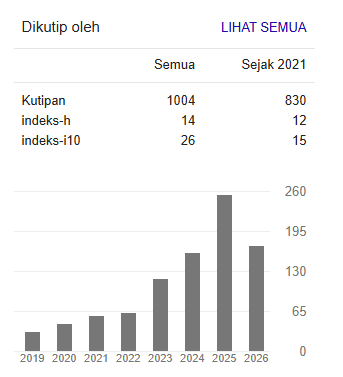
Google Scholar Citations
Journal Tools


Current Issue


Information
MAPS