Animus Digitus
Rethinking the Human in Digital Anthropology Through Islamic Theology
DOI:
https://doi.org/10.20871/kpjipm.v12i1.593Keywords:
Animus Digitus, Digital Ethics, Digital Humanities, Digital Philosophy, Homo DigitusAbstract
This article explores the conceptual transformation of human existence in the digital era through the debate between Homo Digitus and Animus Digitus within the framework of digital humanities and Islamic philosophical–theological anthropology. The main problem addressed in this study concerns the growing tendency toward reductionism in digital discourse, where human beings are increasingly understood as data entities, algorithmic functions, or objects of technological optimization. Such perspectives risk overlooking the dimensions of meaning, faith, and moral responsibility that constitute the core of human existence. This study employs a qualitative conceptual approach grounded in philosophical analysis, digital humanities perspectives, and Islamic theological reflection. The analysis compares the descriptive concept of Homo Digitus—which portrays humans as actors within digital socio-technological systems—with the normative–theological concept of Animus Digitus, which emphasizes humans as subjects endowed with soul, intention, and moral accountability in front of others, the environment, and God. The findings show that while Homo Digitus is analytically useful at the sociological level, it is insufficient to explain the ethical and spiritual dimensions of digital human life and the transcendental aspects that accompany it. The novelty of this research lies in the aspect of proposing the concept Animus Digitus as a normative–theological framework that integrates digital humanities with Islamic anthropology, thereby offering a more holistic interpretation of human existence in the digital age and provide an ethical basis for the development and use of digital technology that is oriented towards human dignity.
Downloads
References
Ali, Fatima, Karim Bouzoubaa, Frank Gelli, Boumediene Hamzi, and Suhair Khan. 2025. “Islamic Ethics and AI: An Evaluation of Existing Approaches to AI Using Trusteeship Ethics.” Philosophy & Technology 38 (3): 120. https://doi.org/10.1007/s13347-025-00922-4.
AlMazaedh, Ismaael, Khalaf M. Tahat, Mohannad Alkhalaileh, and Dina N. Tahat. 2026. “Digital Religion in Platform Societies: Authority, Mediation, and Social Cohesion in Algorithmic Publics (2010–2025).” Frontiers in Sociology 11 (April): 1–14. https://doi.org/10.3389/fsoc.2026.1802281.
Arias, Jorge Mauricio Cuartas. 2019. “Homo Digitalis and Contemporary Psychology.” International Journal of Psychological Research 12 (2): 6–7. https://doi.org/10.21500/20112084.4260.
Azizah, Nur, Jauharul Habibi, Galuh Maria, and Muhammad Aula Rahmad Shuhada. 2024. “Homo Deus: The Islamic Critical Approach to the New Agenda of Humanity According to Harary.” Kanz Philosophia: A Journal for Islamic Philosophy and Mysticism 10 (2): 251–68. https://doi.org/10.20871/kpjipm.v10i2.367.
Bliss, Donald, Raymond Garbos, Patrick Kane, Vyacheslav Kharchenko, Thaddeus Kochanski, and Andrzej Rucinski. 2021. “Homo Digitus: Its Dependable and Resilient Smart Ecosystem.” Smart Cities 4 (2): 514–31. https://doi.org/10.3390/smartcities4020027.
Braidotti, Rosi. 2019. Posthuman Knowledge. Polity Press.
Bucher, Taina. 2017. “The Algorithmic Imaginary: Exploring the Ordinary Affects of Facebook Algorithms.” Information, Communication & Society 20 (1): 30–44. https://doi.org/10.1080/1369118x.2016.1154086.
Bunt, Gary R. 2018. Hashtag Islam: How Cyber-Islamic Environments Are Transforming Religious Authority. Islamic Civilization and Muslim Networks. The University of North Carolina Press.
Campbell, Heidi A., and Pauline Hope Cheong, eds. 2024. The Oxford Handbook of Digital Religion. Oxford University Press. https://doi.org/10.1093/oxfordhb/9780197549803.001.0001.
Campbell, Heidi A., and Giulia Evolvi. 2020. “Contextualizing Current Digital Religion Research on Emerging Technologies.” Human Behavior and Emerging Technologies 2 (1): 5–17. https://doi.org/10.1002/hbe2.149.
Campbell, Heidi A., and Ruth Tsuria. 2021. Digital Religion: Understanding Religious Practice in Digital Media. Routledge. https://doi.org/10.4324/9780429295683.
Campbell, Heidi, and Wendi Bellar. 2023. Digital Religion: The Basics. The Basics Series. Routledge, Taylor & Francis Group. https://doi.org/10.4324/9781003058465.
Couldry, Nick, and Ulises A. Mejias. 2019. The Costs of Connection: How Data Is Colonizing Human Life and Appropriating It for Capitalism. Culture and Economic Life. Stanford University Press. https://doi.org/10.1515/9781503609754.
Coeckelbergh, Mark. 2023. “The Work of Art in the Age of AI Image Generation: Aesthetics and Human-Technology Relations as Process and Performance.” Journal of Human-Technology Relations 1 (1): 1–13. https://doi.org/10.59490/jhtr.2023.1.7025.
Couldry, Nick, and Ulises A. Mejias. 2019a. “Data Colonialism: Rethinking Big Data’s Relation to the Contemporary Subject.” Television & New Media 20 (4): 336–49. https://doi.org/10.1177/1527476418796632.
Couldry, Nick, and Ulises A. Mejias. 2020. The Costs of Connection: How Data Is Colonizing Human Life and Appropriating It for Capitalism. Stanford University Press. https://doi.org/10.1515/9781503609754.
Dasion, Agustinus Gergorius Raja, and Arie Wahyu Prananta. 2024. “The ‘New Space’ of Homo Digitalis: Questioning Humans in the Digital Age.” Digital Theory, Culture & Society 2 (1): 71–78. https://doi.org/10.61126/dtcs.v2i1.44.
Eke, Damian, and Bernd Stahl. 2024. “Ethics in the Governance of Data and Digital Technology: An Analysis of European Data Regulations and Policies.” Digital Society 3 (1): 11–34. https://doi.org/10.1007/s44206-024-00101-6.
Evolvi, Giulia. 2022. “Religion and the Internet: Digital Religion, (Hyper) Mediated Spaces, and Materiality.” Zeitschrift Für Religion, Gesellschaft Und Politik 6 (1): 9–25. https://doi.org/10.1007/s41682-021-00087-9.
Ferrando, Francesca. 2020a. Philosophical Posthumanism. Theory. Bloomsbury Academic.
Ferrando, Francesca. 2020b. Philosophical Posthumanism. Theory. Bloomsbury Academic.
Floridi, Luciano. 2014. The 4th Revolution: How the Infosphere Is Reshaping Human Reality. Oxford University Press.
Floridi, Luciano, ed. 2015. The Onlife Manifesto: Being Human in a Hyperconnected Era. Springer eBook Collection. Springer International Publishing. https://doi.org/10.1007/978-3-319-04093-6.
Floridi, Luciano. 2019. The Logic of Information: A Theory of Philosophy as Conceptual Design. Oxford University Press.
Floridi, Luciano. 2021. “Digital Ethics Online and Off.” American Scientist 109 (4): 218. https://doi.org/10.1511/2021.109.4.218.
Floridi, Luciano. 2023. The Ethics of Artificial Intelligence: Principles, Challenges, and Opportunities. Oxford University Press.
Floridi, Luciano. 2024. “The Ethics of Artificial Intelligence: Exacerbated Problems, Renewed Problems, Unprecedented Problems - Introduction to the Special Issue of the American Philosophical Quarterly Dedicated to The Ethics of AI.” SSRN Electronic Journal, 1–14. https://doi.org/10.2139/ssrn.4801799.
Han, Byung-Chul. 2017. Psychopolitics: Neoliberalism and New Technologies of Power. Translated by Erik Butler. Verso Futures. Verso.
Hanna, Robert, and Emre Kazim. 2021. “Philosophical Foundations for Digital Ethics and AI Ethics: A Dignitarian Approach.” AI and Ethics 1 (4): 405–23. https://doi.org/10.1007/s43681-021-00040-9.
Harari, Yuval N. 2017. Homo Deus: A Brief History of Tomorrow. Signal and imprint of McClelland & Stewart.
Hardiman, F. Budi. 2018. “Manusia dalam Prahara Revolusi Digital.” Diskursus: Jurnal Filsafat dan Teologi 17 (2): 177–92. https://doi.org/10.36383/diskursus.v17i2.252.
Hutchings, Tim, Céline Benoit, and Rachael Shillitoe. 2022. “Religion and Worldviews: The Way Forward? Considerations from the Study of Religion, Non-Religion and Classroom Practice.” Journal of the British Association for the Study of Religions 23 (November): 8–28. https://doi.org/10.18792/jbasr.v23i0.54.
Ihde, Don. 2019. Medical Technics. Forerunners. University of Minnesota Press.
Izutsu, Toshihiko. 2002. Ethico-Religious Concepts in the Qurʼān. McGill-Queen’s University Press.
Ja’far, Suhermanto. 2011. “Citra Manusia Dari Filsafat Psikologi Ke Filsafat Antropologi (Refleksi Tentang Manusia dalam Perspektif Mohammad Iqbal).” Kanz Philosophia: A Journal for Islamic Philosophy and Mysticism 1 (2): 227–52. https://doi.org/10.20871/kpjipm.v1i2.21.
Ja’far, Suhermanto. 2013. “Manusia dalam Perspektif Metafisika dan Islam.” Disertation, Pascasarjana UIN Sunan Ampel Surabaya.
Ja’far, Suhermanto. 2015. “Epistemologi Tindakan Muhammad Iqbal.” Teosofi: Jurnal Tasawuf dan Pemikiran Islam 5 (1): 80–106. https://doi.org/10.15642/teosofi.2015.5.1.80-106.
Ja’far, Suhermanto. 2017. “Konsep Being Perspektif Filsafat dan Islam.” ISLAMICA: Jurnal Studi Keislaman 11 (2): 522–45. https://doi.org/10.15642/islamica.2017.11.2.522-544.
Ja’far, Suhermanto. 2026. “Digital Philosophy and Digital Theophany: LLMs as Ontological and Epistemological Mediums of Revelation in the Age of AI.” Journal for the Study of Religions and Ideologies, March 6, 19–37.
Joyeux-Prunel, Béatrice. 2024. “Digital Humanities in the Era of Digital Reproducibility: Towards a Fairest and Post-Computational Framework.” International Journal of Digital Humanities 6 (1): 23–43. https://doi.org/10.1007/s42803-023-00079-6.
Kamali, Mohammad Hashim. 2015. The Middle Path of Moderation in Islam: The Qurʼānic Principle of Wasaṭiyyah. Oxford University Press.
Kartanegara, Mulyadhi, and Haidar Bagir. 2005. Integrasi ilmu: sebuah rekonstruksi holistik. PT Mizan Pustaka.
Khan, Shadab Ali. 2025. “Beyond Reason: Iqbal’s Interplay Between Intellect and Love in the Search for Truth.” Kanz Philosophia: A Journal for Islamic Philosophy and Mysticism 11 (2): 361–82. https://doi.org/10.20871/kpjipm.v11i2.424.
Kwet, Michael. 2019. “Digital Colonialism: US Empire and the New Imperialism in the Global South.” Race & Class 60 (4): 3–26. https://doi.org/10.1177/0306396818823172.
Leaman, Oliver. 2019. Islam and Morality: A Philosophical Introduction. Bloomsbury Academic.
Lutz, Christoph. 2019. “Digital Inequalities in the Age of Artificial Intelligence and Big Data.” Human Behavior and Emerging Technologies 1 (2): 141–48. https://doi.org/10.1002/hbe2.140.
Lynch, Melody. 2022. “Data Lives: How Data Are Made and Shape Our World: Rob Kitchin. Bristol, UK: Bristol University Press, 2021. Xii and 262 Pp., Notes, Index. $28.50 Paper (ISBN 9781529215144); $28.50 Electronic (ISBN 978-1529215151).” The AAG Review of Books 10 (2): 20–21. https://doi.org/10.1080/2325548x.2022.2036546.
Maulida, Syazna, and Suhermanto Ja’far. 2022. “Islam and Homo Deus in Anthropocentric Theology: A Religious Challenge in the Future.” TAJDID: Jurnal Ilmu Ushuluddin 21 (1): 108–24. https://doi.org/10.30631/tjd.v21i1.229.
Mittelstadt, Brent. 2019. “AI Ethics–Too Principled to Fail?” SSRN Electronic Journal, 1–19. https://doi.org/10.2139/ssrn.3391293.
Mökander, Jakob, and Luciano Floridi. 2022. “From Algorithmic Accountability to Digital Governance.” Nature Machine Intelligence 4 (6): 508–9. https://doi.org/10.1038/s42256-022-00504-5.
Moosa, Ebrahim. 2015. What Is a Madrasa? Edinburgh Univ. Press.
Moosa, Ebrahim. 2022. “Muslim Ethics?” In Encyclopedia of Religious Ethics, edited by William Schweiker. Wiley. https://doi.org/10.1002/9781118499528.ch66.
Ramadan, Tariq. 2017. Islam: The Essentials. Translated by Fred A. Reed. A Pelican Book. Pelican imprint of Penguin Books.
Ruckenstein, Minna, and Julia Granroth. 2020. “Algorithms, Advertising and the Intimacy of Surveillance.” Journal of Cultural Economy 13 (1): 12–24. https://doi.org/10.1080/17530350.2019.1574866.
Salerno, Emanuele. 2024. “Digital Humanities: Mission Accomplished? An Analysis of Scholarly Literature.” Cultures of Science 7 (1): 34–48. https://doi.org/10.1177/20966083241234379.
Souza, Evelyn De. 2018. “The Era of Homo Digitus.” In Women in Security, edited by Debra A. Christofferson. Women in Engineering and Science. Springer International Publishing. https://doi.org/10.1007/978-3-319-57795-1_4.
Taneo, Rolin Ferdilianto Sandelgus. 2024. “Manusia Sebagai Homo Digitalis: Suatu Wacana Teologi Publik Gereja Atas Keterlemparan Manusia di Ruang Digital.” SOPHIA: Jurnal Teologi dan Pendidikan Kristen 5 (1): 55–69. https://doi.org/10.34307/sophia.v5i1.234.
Taylor, Charles. 2016. The Language Animal: The Full Shape of the Human Linguistic Capacity. Harvard University Press.
Thompson, Evan. 2020. Why I Am Not a Buddhist. Yale University Press.
Umbrello, Steven, and Paul O’Hara. 2025. “Human Dignity in the Digital Age.” Journal of Ethics and Emerging Technologies 35 (1): 1–22. https://doi.org/10.55613/jeet.v35i1.165.
Vallor, Shannon. 2016. Technology and the Virtues: A Philosophical Guide to a Future Worth Wanting. Oxford University Press.
Vallor, Shannon. 2024. The AI Mirror: How to Reclaim Our Humanity in an Age of Machine Thinking. Oxford University Press.
Williams, Rowan. 2018. Being Human: Bodies, Minds, Persons. William B. Eerdmans Publishing Company.
Zuboff, Shoshana. 2019. The Age of Surveillance Capitalism. PublicAffairs.
Zuboff, Shoshana. 2020. The Age of Surveillance Capitalism: The Fight for a Human Future at the New Frontier of Power. First trade paperback edition. PublicAffairs.
Zuboff, Shoshana. 2022. “Surveillance Capitalism or Democracy? The Death Match of Institutional Orders and the Politics of Knowledge in Our Information Civilization.” Organization Theory 3 (3): 1–79. https://doi.org/10.1177/26317877221129290.
Downloads
Published
How to Cite
Issue
Section
License
Copyright (c) 2026 Suhermanto Ja'far, Kunawi Kunawi

This work is licensed under a Creative Commons Attribution 4.0 International License.


Evaluation Progress Scopus

CITEDNESS IN SCOPUS
Sinta

Article Template

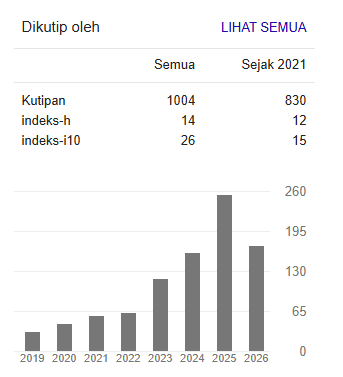
Google Scholar Citations
Journal Tools


Current Issue


Information
MAPS