The Epistemological Crisis of Ḥuḍūr in Digital Tafsir
Conceptual-Empirical Study of NU Online and Detik.Com
DOI:
https://doi.org/10.20871/kpjipm.v12i1.564Keywords:
Detik.com, Ḥuḍūr, Islamic Mysticism, NU Online, Qur’anic ExegesisAbstract
Digital qur’anic exegesis emerges at the intersection of classical interpretive traditions and the fast-paced, fragmented, and algorithm-driven logic of online media. This transformation not only reshapes how tafsir is delivered but also shifts the reader’s epistemological experience from the presence of meaning (ḥuḍūr) toward the dominance of representation (ḥuṣūlī). This study aims to critically analyze the epistemological crisis of ḥuḍūr in digital tafsir while proposing a conceptual framework grounded in Islamic mysticism to understand this shift within the context of online media. Employing a qualitative conceptual-empirical approach, the study applies philosophical analysis and mystical hermeneutics to exegetical texts published on NU Online and Detik.com as strategic case studies. The analytical framework integrates the thought of al-Ghazālī (ḥuḍūr al-qalb), Ibn ‘Arabī (tajallī), and Mullā Ṣadrā (‘ilm ḥuḍūrī vs. ḥuṣūlī) to evaluate five operational indicators of ḥuḍūr: intentionality, attention structure, interpretive ethics, existential engagement, and ethical transformation. The findings reveal that digital tafsir tends to exhibit fragmented attention, reduced hermeneutical depth, and a shift from inner transformation toward informative and normative functions. Algorithmic mediation and speed-oriented content structures reinforce representational knowledge, thereby weakening experiences of tajallī and dhawq in engaging the Qur’an. The study concludes that the crisis of ḥuḍūr is not merely a consequence of the digital medium but arises from the interaction between media logic and the epistemic disposition of the subject. It calls for a reorientation of tafsir as an existential experience integrating ethical, ontological, and epistemological dimensions.
Downloads
References
Afandi, A. 1990. “Pemikiran Ibnu ‘Arabi Tentang Hakekat Wujud.” Al-Jami’ah: Journal of Islamic Studies, no. 41: 31–54. https://doi.org/10.14421/ajis.1990.041.31-54.
Akbar, Rizamul Malik, and Achmad Khudori Soleh. 2025. “The Classification of Knowledge Based on Al-Ghazali’s Perspective and Its Relevance to Qur’anic Exegesis.” FiTUA: Jurnal Studi Islam 6 (2): 218–28. https://doi.org/10.47625/fitua.v6i2.1066.
Amin, M. Samsudin. 2025. “Pengaruh Algoritma Media Sosial Terhadap Narasi keislaman di Ruang Digital.” El-Wasathy: Journal of Islamic Studies 3 (1): 148–58. https://doi.org/10.61693/elwasathy.vol31.2025.148-158.
AN, Andri Nirwana. 2024. “Multimedia Tafsir: Exploring the Meaning of the Quran in the Digital Era.” SSRN Scholarly Paper No. 4785707. Social Science Research Network, April 5. https://doi.org/10.2139/ssrn.4785707.
‘Arabī, Ibn. 2006. Fuṣūṣ al-Ḥikam. Dār al-Kutub al-ʿIlmiyyah.
Armita, Pipin. 2025. “Digital Da’wah and Quranic Interpretation: Opportunities, Distortions, and Ethics in the Spread of Interpretations on Social Media.” International Journal of Islamic Thought and Humanities 4 (1): 154–64. https://doi.org/10.54298/ijith.v4i1.421.
Ashfiya’, Rofiqoh Nurul. 2024. “New Direction of the Qur’an Interpretation in Indonesia: A Study of Nadirsyah Hosen’s Interpretation on Social Media.” Al-Karim: International Journal of Quranic and Islamic Studies 2 (2): 165–84. https://doi.org/10.33367/al-karim.v2i2.5254.
Benevic, Fedrich. 2024. Essence and Existence in Arabic and Islamic Philosophy. Stanford Encyclopedia.
Chaer, Hasanuddin, and Abdul Rasyad. 2019. “Hermeneutika Al-Qur’an Suroh Al-Isro’ Ayat 1 Sebuah Tinjauan Kosmologi.” PALAPA 7 (1): 66–98. https://doi.org/10.36088/palapa.v7i1.182.
Creţu, Ioana-Narcisa. 2021. “‘Characteristics of Online Communication. Advantages and Limitations.’” SAECULUM 52 (2): 39–44. https://doi.org/10.2478/saec-2021-0016.
Laoera, Bruce Dame, and Tangguh Okta Wibowo. 2023. “Indonesian Online News and Digital Culture: A Media Ecology Perspective.” Jurnal Studi Komunikasi (Indonesian Journal of Communications Studies) 7 (2): 355–68. https://doi.org/10.25139/jsk.v7i2.6190.
Effendi, Rahmat. 2021. “Al-Asfār al-Arba‘at Sebagai Basis Metafisika Mullā Shadrā Rahmat Effendi.” Tribakti 32 (2): 76–77.
Firmansyah, Deri, and Dede. 2022. “Teknik Pengambilan Sampel Umum dalam Metodologi Penelitian: Literature Review.” Jurnal Ilmiah Pendidikan Holistik (JIPH) 1 (2): 85–114. https://doi.org/10.55927/jiph.v1i2.937.
Ghozali, Mahbub. 2022. “Penafsiran al-Qur’an Retoris di Media Sosial: Pola Persuasif Ustaz Adi Hidayat melalui YouTube.” Jalsah: The Journal of Al-Qur’an and As-sunnah Studies 2 (2): 1–31. https://doi.org/10.37252/jqs.v2i2.324.
Habib, Habib, and Muslich Shabir. 2022a. “Al-Ghazali’s Qur’anic Sufi Hermeneutics: Study on the Story of Abraham in Search of God.” Kalam 15 (2): 121–44. https://doi.org/10.24042/klm.v15i2.9523.
Hamat, Mohd Fauzi, Mohd Hasrul Shuhari, and Muhammad Nasri Hassan Basri. 2019. “Al-Ghazali’s Thought on the Existence of Allah Swt in Ihya’ ‘Ulum Al-Din.” European Proceedings of Social and Behavioural Sciences Role(s) and Relevance of Humanities for Sustainable Development (September): 532–42. https://doi.org/10.15405/epsbs.2019.09.59.
Harbani, Rahma Indina (detiknews). 2021. “Surah Ali Imran Ayat 159, Konsep Musyawarah Ala Rasulullah.” https://news.detik.com/berita/d-5652033/surah-ali-imran-ayat-159-konsep-musyawarah-ala-rasulullah.
Hariyanto, Ishak, and Apipuddin. 2025. “Hermeneutics of The Qur’an in Digital Space: Discourse Analysis of Interpretation and Religious Authority.” Tahiro: Journal of Peace and Religious Moderation 2 (2): 139–50. https://doi.org/10.20414/tahiro.v2i2.14774.
Hidayati, Dahlia. 2022. “Online Sufism and Reestablishing Religious Authority.” Ulumuna 26 (1): 203–36. https://doi.org/10.20414/ujis.v26i1.488.
Iktafi, Muhammad Syaf’ul (NU Online). 2025. “Ukhuwah Basyariyah dan Prinsip Perdamaian dalam Islam.” https://islam.nu.or.id/tafsir/ukhuwah-basyariyah-dan-prinsip-perdamaian-dalam-islam-aloja.
Irham, M. Iqbal. 2023. “Sufism Psychotherapy: Hudur al-Qalb Method for Mental Health.” Journal of Asian Wisdom and Islamic Behavior 1 (2): 94–103. https://doi.org/10.59371/jawab.v1i2.58.
Ja’far, Ja’far. 2022. “Klasifikasi Ilmu dalam Tradisi Intelektual Islam.” Islamijah: Journal of Islamic Social Sciences 3 (2): 97–106. https://doi.org/10.30821/islamijah.v3i2.12576.
Lala, İsmail. 2021. “Qurʾānic Knowledge and Akbarian Wisdom: Ibn ‘Arabī’s Daring Hermeneutics in Fuṣūṣ al-Ḥikam.” Cumhuriyet İlahiyat Dergisi 25 (1): 479–93. https://doi.org/10.18505/cuid.851857.
Lubis, Zainuddin (NU Online). 2025. “Tafsir Surat Al-Baqarah Ayat 155: Menghadapi Musibah dengan Keimanan dan Ketabahan.” https://nu.or.id/tafsir/tafsir-surat-al-baqarah-ayat-155-menghadapi-musibah-dengan-keimanan-dan-ketabahan-2uX0i.
Lufaefi, Lufaefi, and Lukita Fahriana. 2025. “Between Contextualization and Distortion: Interpretation of Qur’anic Verses on Nationalism in Detik.Com and Nu Online.” Tanzil: Jurnal Studi Al-Quran 7 (2): 251–70. https://doi.org/10.20871/tjsq.v7i2.412.
Matroni, Matroni. 2018. “Pemikiran Mistiko-Filosofis Mulyadhi Kartanegara.” Aqlam: Journal of Islam and Plurality 3 (2): 177–96. https://doi.org/10.30984/ajip.v3i2.720.
Mesbah, Ali. 1998. “Subject-Object Relation in Mullâ Sadrâ’s Theory of Knowledge.” The Paideia Archive: Twentieth World Congress of Philosophy 45 (January): 170–75. https://doi.org/10.5840/wcp20-paideia199845880.
Mirzarakhimov, Bakhtiyor. 2025. “The Essence of the Concept of Wahdat Al-Wujud in Muhyiddin Ibn Arabi’s Sufism: An Analysis Based on the ‘Risalat Al-Wujudiyya.’” Journal of Islamic Thought and Civilization 15 (1): 99–112. https://doi.org/10.32350/jitc.151.06.
Mohamed, Dheen. 2002. Review of Review of Sufism: A Short Introduction, by William C. Chittick. Islamic Studies 41 (2): 335–46.
Mu’ammar, Moh Nadhir. 2019. “Study of Approaches, Methods, Sources and Interpretation Instruments of Mulla Sadra.” International Journal of Islamic Khazanah 9 (1): 1–8. https://doi.org/10.15575/ijik.v9i1.9015.
Mulyani, Mulyani. 2025. “Ontologi Al-Qur’an: Antara Kalam Ilahi dan Kalam Insani (Sebuah Telaah Filosofis).” Tadabbur: Jurnal Peradaban Islam 7 (1): 65–94. https://doi.org/10.22373/tadabbur.v7i1.765.
Nasr, Hossen. 2005. The Study Quran: A New Translation and Commentary. HarperOne.
Nurfajrina, Azkia (detikhikmah). 2023. “Al Baqarah Ayat 30: Penciptaan Manusia sebagai Khalifah di Bumi.” https://www.detik.com/hikmah/khazanah/d-6736927/al-baqarah-ayat-30-penciptaan-manusia-sebagai-khalifah-di-bumi.
Nurhamidin, Budi, Sabil Mokodenseho, Haslinda Mokodompit, Amaludin Bahansubu, and Prasetio Rumondor. 2025. “Transformasi Otoritas Keagamaan di Era Digital, Analisis Sosiologis Terhadap Pergeseran Pola Otoritas Ulama di Media Sosial.” Al-Muqaddimah 1 (1): 39–39.
Nurjannah, Elina, Abdullah Hadani, and Muhammad Akhdan Muzakki. 2024. “A Contextual Interpretation of the Secrets of Surah Al-Fatiḥah in al-Ghazali’s Jawāhir al-Qur’an.” Taqaddumi: Journal of Quran and Hadith Studies 4 (2): 122–34. https://doi.org/10.12928/taqaddumi.v4i2.12234.
Rahman, Parvejur, and Sagufta Mehnaz. 2024. “Public Policy in Bangladesh: Balancing Change and Stability.” SSRN Electronic Journal 32 (4): 1–9. https://doi.org/10.2139/ssrn.5054029.
Richtig, Iqomah, and Muhammad Saifullah. 2022. “‘Quranreview’:” Suhuf 15 (2): 267–87. https://doi.org/10.22548/shf.v15i2.765.
Romadhon, M. Ryan (NU Online). 2025. “Menimbang Ketaatan kepada Ulil Amri di Negara Demokrasi.” https://islam.nu.or.id/tafsir/menimbang-ketaatan-kepada-ulil-amri-di-negara-demokrasi-INCHT.
Ṣadrā, Mullā. 1990. al-Ḥikmah al-Muta‘āliya fī al-Asfār al-‘Aqliyyah al-Arba‘ah. Dār Iḥyā’ al-Turāth al-‘Arabī.
Salsabila, Iin, Dinda Meiliani, Sabila Maharani, and Reza Noprial Lubis. 2025. “Desain Penelitian Studi Kasus.” Jurnal Arjuna: Publikasi Ilmu Pendidikan, Bahasa dan Matematika 3 (3): 245–54. https://doi.org/10.61132/arjuna.v3i3.1937.
Sihabussalam, Sihabussalam, Sa’adatul Lailah, and Roma Wijaya. 2024. “Digital Era Qur’anic Interpretation in Indonesia:” Suhuf 17 (1): 87–114. https://doi.org/10.22548/shf.v17i1.998.
Suddick, Kitty Maria, Vinette Cross, Pirjo Vuoskoski, Kathleen T. Galvin, and Graham Stew. 2020. “The Work of Hermeneutic Phenomenology.” International Journal of Qualitative Methods 19 (January): 1609406920947600. https://doi.org/10.1177/1609406920947600.
Surya, Ilham, Muhammad Imran, Muhamad Wuddy Agnia Ihsan, et al. 2025. “Reconstructing the Epistemology of Classical Islamic Dream Interpretation: A Critical Examination of Fakhr al-Dīn al-Rāzī’s Thought in the Book of Mafātīḥ al-Ghayb.” Research Journal in Advanced Humanities 6 (3): 1–12.
Virginia, Amelia. 2017. “Pergeseran Budaya Komunikasi Pada Era Media Baru: Studi Kasus Penggunaan Facebook oleh Digital Natives.” Jurnal Komunikasi Indonesia 1 (2): 77–86. https://doi.org/10.7454/jki.v1i2.7822.
Wahyuddin, Indra. 2025. Interpretasi Al-Qur’an di Era Informasi: Dampak Media Sosial Terhadap Pemahaman Ajaran Islam. 7 (1): 299–307. https://doi.org/10.18860.
Warno, Nano. 2023. “Study Comparison on Knowledge by Presence in the Views of Ibn Sīnā, Suhrawardī, and Mullā Ṣadrā.” Kanz Philosophia: A Journal for Islamic Philosophy and Mysticism 9 (2): 333–52. https://doi.org/10.20871/kpjipm.v9i2.291.
Yani, Indah Fitrah (detikhikmah). 2025. “Surah Al-Isra Ayat 1 tentang Perjalanan Isra’ dan Mi’raj Rasulullah SAW.” https://www.detik.com/hikmah/khazanah/d-8105495/surah-al-isra-ayat-1-tentang-perjalanan-isra-dan-miraj-rasulullah-saw.
Downloads
Published
How to Cite
Issue
Section
License
Copyright (c) 2026 Lufaefi Lufaefi, Siti Kafidhoh, Isyroqotun Nashoiha, Sulalatun Nikma, Himmah Aliyah

This work is licensed under a Creative Commons Attribution 4.0 International License.


Evaluation Progress Scopus

CITEDNESS IN SCOPUS

Sinta

Article Template

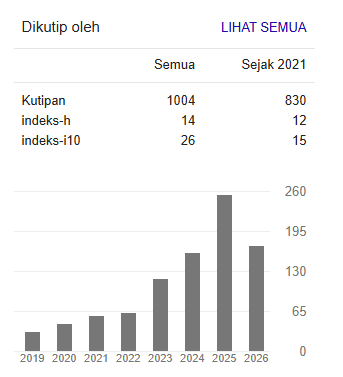
Google Scholar Citations
Journal Tools


Current Issue


Information
MAPS