Dehellenization vs. Islamization of Philosophy
A Historiographical Debate in the Study of Islamic Philosophy
DOI:
https://doi.org/10.20871/kpjipm.v12i1.562Keywords:
Dehellenization, Islamization, Islamic PhilosophyAbstract
This research critically analyzes the historiographical debate surrounding the transmission of Greek philosophy to the Islamic world, polarized into two main paradigms: dehellenization and Islamization. The background of this research lies in the unresolved epistemological tension within contemporary academic discourse concerning the nature of the Islamization of philosophy, as well as the legitimacy of philosophy in the Islamic intellectual tradition. The research question posed is: how to comprehensively understand the process of the Islamization of philosophy, moving beyond the simplistic dichotomy between purification and hybridization? This research aims to offer a new, more holistic perspective on the dialectic between Islamic philosophy and Greek heritage, focusing the analysis on concrete intellectual practices. This research uses a qualitative-interpretive approach with intellectual history methods, literature, and integrates three theories, namely: the transmission of knowledge from Dimitri Gutas, the theory of cultural hybridity from Homi K. Bhabha, and the philosophical hermeneutics from Hans-Georg Gadamer. Research findings indicate that the Islamization of philosophy is a multidimensional phenomenon encompassing aspects of creative selection, transformative adaptation, and original synthesis. This process involves interconnected intellectual operations, namely filtering, embedding, and generating. Furthermore, this research reveals the distinctive methodology of Muslim philosophers, which includes tafsiriyyah hermeneutics and integrative epistemology with its various models. The theoretical contribution of this research is a new model for understanding the transmission of knowledge across cultures and a historical foundation for contemporary Islamic-Western philosophical dialogue.
Downloads
References
Abdeldeen, Mahmoud. 2024. “Themes of Al-Farabi’s Document in Linguistic Evidence Citation Compared to the Methodology of Grammarians: Sibawayh’s Book as a Case Study.” International Journal for Scientific Research 3 (2): 136–59. https://doi.org/10.59992/ijsr.2024.v3n2p6.
Abdul-Jabbar, Wisam Kh. 2020. “Al-Kindi on Education: Curriculum Theorizing and the Intercultural Minhaj.” Curriculum Inquiry 50 (3): 262–80. https://doi.org/10.1080/03626784.2020.1809966.
Adamson, Peter. 2002. “Before Essence and Existence: Al-Kindī’s Conception of Being.” Journal of the History of Philosophy 40 (3): 297–312. https://doi.org/10.1353/hph.2002.0043.
Adamson, Peter. 2003. “Al-Kindī and the Mu’tazila: Divine Attributes, Creation and Freedom.” Arabic Sciences and Philosophy 13 (1): 45–77. https://doi.org/10.1017/s0957423903003035.
Adamson, Peter. 2004. “Al-Kindī and the Reception of Greek Philosophy.” In The Cambridge Companion to Arabic Philosophy, edited by Peter Adamson and Richard C. Taylor. Cambridge Companions to Philosophy. Cambridge University Press. https://doi.org/10.1017/ccol0521817439.003.
Adamson, Peter. 2007. Al-Kindī, Great Medieval Thinkers. Oxford Academic. https://doi.org/10.1093/acprof:oso/9780195181425.001.0001.
Adamson, Peter. 2016. Philosophy in the Islamic World: A History of Philosophy without Any Gaps. A History of Philosophy. Oxford University Press.
Adamson, Peter. 2017. “The Arabic Socrates: The Place of al-Kind’s Report in the Tradition.” In Socrates from Antiquity to the Enlightenment, edited by Michael Trapp. Routledge.
Ahida, Ridha. 2022. “Al Ghazali and Philosophy of History.” Voprosy Istorii 1 (2): 168–76. https://doi.org/10.31166/voprosyistorii202201statyi72.
Akib, Mohd Manawi Mohd. 2025. “Comparative Analysis of the Concepts of the Soul’s Resurrection and Hereafter Happiness in the Thought of Ibn Sina and Al-Ghazali from the Perspective of Islamic Psychospirituality.” Afkar: Jurnal Akidah dan Pemikiran Islam 27 (2): 311–40. https://doi.org/10.22452/afkar.vol27no2.10.
Algeriani, Adel Abdul-Aziz, and Mawloud Mohadi. 2017. “The House of Wisdom (Bayt Al-Hikmah) and Its Civilizational Impact on Islamic Libraries: A Historical Perspective.” Mediterranean Journal of Social Sciences 8 (5): 179–87. https://doi.org/10.1515/mjss-2017-0036.
Algeriani, Adel M. AbdulAziz, and Mawloud Mohadi. 2019. “The House of Wisdom (Bayt Al-Hikmah), an Educational Institution during the Time of the Abbasid Dynasty. A Historical Perspective.” Pertanika Journal of Social Science and Humanities 27 (2): 1297–313.
Allebban, Emann. 2026. “Avicenna’s Metaphysical Efficient Cause Revisited.” Islamic Intellectual Traditions 1 (1): 35–70. https://doi.org/https://doi.org/10.1163/30511534-20260103.
Amir, Ahmad Nabil. 2023. “Theory and Philosophy of Science Islamization.” Al-Mubin: Islamic Scientific Journal 6 (2): 1–9. https://doi.org/10.51192/almubin.v6i2.434.
Armayanto, Harda, Adib Fattah Suntoro, Achmad Reza Hutama Al Faruqi, and Maria Ulfa. 2025. “Al-Kindī’s Metaphysics: The Integration of Greek Philosophy in Islamic Philosophy.” Kanz Philosophia: A Journal for Islamic Philosophy and Mysticism 11 (1): 89–104. https://doi.org/10.20871/kpjipm.v11i1.410.
Attas, Muhammad Naguib Al-. 1980. The Concept of Education in Islam: A Framework for an Islamic Philosophy of Education. Muslim Youth Movement of Malaysia (ABIM).
Averroes. 1954. Tahafut Al Tahafut: The Incoherence of the Incoherence. Translated by Simon van den Bergh. Luzac & Company.
Bellver, José. 2020. “The Beginnings of Rational Theology in Al-Andalus: Ibn Masarra and His Refutation of Al-Kindī’s on First Philosophy.” Al Qantara 41 (2): 323–71. https://doi.org/10.3989/alqantara.2020.009.
Benevich, Fedor. 2025. “Pleasure, Pain, and Desire: Epistemology and Ontology of Mental States in Kalam.” Journal of Islamic Studies 36 (3): 329–59. https://doi.org/10.1093/jis/etaf011.
Bertolacci, Amos. 2006. The Reception of Aristotle’s Metaphysics in Avicenna’s Kitāb Al-Šifā’: A Milestone of Western Metaphysical Thought. Leiden, The Netherlands: Brill. https://doi.org/10.1163/9789047408710.
Bhabha, Homi K. 1994. The Location of Culture. Routledge. Routledge Taylor & Francis Group. https://doi.org/10.4324/9780203820551.
Calis, Halim. 2022. “The Theoretical Foundations of Contextual Interpretation of the Qur’an in Islamic Theological Schools and Philosophical Sufism.” Religions 13 (2): 188. https://doi.org/10.3390/rel13020188.
Ceylan, Yasin. 1995. “Al Ghazali between Philosophy and Sufism.” American Journal of Islam and Society 12 (4): 584–89. https://doi.org/10.35632/ajis.v12i4.2364.
Christou, Anastasia. 2010. “Hellenisms: Culture, Identity and Ethnicity from Antiquity to Modernity.” Journal of Ethnic and Migration Studies 36 (4): 708–9. https://doi.org/10.1080/13691831003675803.
Dallal, Ahmad. 2010. Islam, Science, and the Challenge of History. Yale University Press.
Delva, Thijs. 2017. “The Abbasid Activist Ḥayyān Al-‘Aṭṭār as the Father of Jābir b. Ḥayyān: An Influential Hypothesis Revisited.” Journal of Abbasid Studies 4 (1): 35–61. https://doi.org/10.1163/22142371-12340030.
Diagne, Souleymane Bachir. 2004. “Islam and Philosophy: Lessons from an Encounter.” Diogenes 51 (2): 123–28. https://doi.org/10.1177/0392192104044279.
Djuwairiyah, Djuwairiyah, and Noviasari Maimunah. 2021. “Peran Penting Pendidikan dalam Transmisi Filsafat Yunani ke Dunia Islam.” Edupedia: Jurnal Studi Pendidikan dan Pedagogi Islam 6 (1): 31–8. https://doi.org/10.35316/edupedia.v6i1.1359.
Endress, Gerhard. 2012. “Höfischer Stil Und Wissenschaftliche Rhetorik: Al-Kindī Als Epistolograph.” In Islamic Philosophy, Science, Culture, and Religion: Studies in Honor of Dimitri Gutas, edited by Opwis Felicitas and David Reisman. Brill. https://doi.org/10.1163/9789004217768_015.
Endress, Gerhard, and Remke Kruk. 1997. The Ancient Tradition in Christian and Islamic Hellenism: Studies on the Transmission of Greek Philosophy and Sciences Dedicated to H. J. Drossaart Lulofs on his Ninetieth Birthday. Research School CNWS.
Erman, Burak Veysel. 2022. “Methods in Islamic Philosophy Studies and Historiography of Thought: An Evaluation Based on Revisionist Al-Ghazālī Studies.” Islam Tetkikleri Dergisi–Journal of Islamic Review 12 (2): 779–803. https://doi.org/10.26650/iuitd.2022.1117151.
Fakhry, Majid. 2004. A History of Islamic Philosophy. Columbia University Press.
Fazzo, Silvia, and Hillary Wiesiner. 1993. “Alexander of Aphrodisias in the Kindī-Circle and in Al-Kindī’s Cosmology.” Arabic Sciences and Philosophy 3 (1): 119–53. https://doi.org/10.1017/s0957423900001739.
Foucault, Michel. 1972. The Archaeology of Knowledge. Pantheon Books.
Frank, Richard M. 1994. Al-Ghazali and the Ash‘arite School. Duke University Press.
Frank, Richard M. 2020. Classical Islamic Theology: The Ash`arites: Texts and Studies on the Development and History of Kalam, Vol. III. Edited by Dimitri Gutas. Routledge. https://doi.org/10.4324/9781003110392.
Gadamer, Hans-Georg. 2004. Truth and Method. Continuum.
Ghazālī, Al-. 2000. The Incoherence of the Philosophers. Translated by Michael E. Marmura. Harold B. Lee Library.
Goldziher, Ignaz. 1910. Greek Elements in Islamic Thought. Oxford University Press Inc.
Griffel, Frank. 2009. Al-Ghazali’s Philosophical Theology. Oxford University Press.
Griffel, Frank. 2021. The Formation of Post-Classical Philosophy in Islam. Oxford University Press.
Griffel, Frank. 2024. “Essay-Review Al-Suhrawardī’s Philosophy Contextualized.” Arabic Sciences and Philosophy 34: 139–52. https://doi.org/10.1017/s0957423923000139.
Gutas, Dimitri. 1998. Greek Thought, Arabic Culture: The Graeco-Arabic Translation Movement in Baghdad and Early Abbasid Society. Routledge Taylor & Francis Group.
Gutas, Dimitri. 2002. “The Study of Arabic Philosophy in the Twentieth Century: An Essay on the Historiography of Arabic Philosophy.” British Journal of Middle Eastern Studies 29 (1): 5–25. http://www.jstor.org/stable/826146.
Hamdani, Abbas. 2011. “The Ikhwān Al-Ṣafāʾ: Between al-Kindī and al-Fārābī.” In Fortresses of the Intellect: Ismaili and Other Islamic Studies in Honour of Farhad Daftary, edited by Omar Alí-de-Unzaga. Tauris Publishers in association with the Institute of Ismaili Studies.
Hassan, Mahadi Abu, Safiah Sidek, Shahrulanuar Mohamed, and Norliah Kudus. 2016. “The Perspectives of Four Muslim Scholars on Islamization of Science.” Sci. Int. (Lahore) 28 (2): 1359–62.
Hasse, Dag Nikolaus. 2007. “Arabic Philosophy and Averroism.” In The Cambridge Companion to Renaissance Philosophy, edited by James Hankins. Cambridge University Press. https://doi.org/10.1017/ccol052184648x.007.
Hasse, Dag Nikolaus. 2009. “Influence of Arabic and Islamic Philosophy on the Latin West.” In Stanford Encyclopedia of Philosophy, edited by Edward N. Zalta and Uri Nodelman. Metaphysics Research Lab, Stanford University. https://plato.stanford.edu/archives/win2025/entries/arabic-islamic-influence/.
Hoover, Jon. 2020. Ibn Taymiyya. Makers of the Muslim World. Oneworld Publications.
Huda, Ali Anhar Syi’bul, Abid Nurhuda, Anggi Ariska Putri, and Anas Assajad. 2023. “Ibnu Rusyd’s Brilliant Ideas in His Contribution to Islamic Education.” Jurnal Hurriah: Jurnal Evaluasi Pendidikan Dan Penelitian 4 (4): 411–19. https://doi.org/10.56806/jh.v4i4.160.
Ibrahim, Bilal. 2020. “The Elements of Avicenna’s Physics: Greek Sources and Arabic Innovations by Andreas Lammer.” Journal of the History of Philosophy 58 (1): 168–70. https://doi.org/10.1353/hph.2020.0009.
Iskakuly, Danday, Maxat Kopbossynov, Ulan Yerkinbayev, Saulet Alpysbayeva, and Kuanyshbek Kenzhalin. 2021. “The Phenomenon of a Happy Person in the Works of Al-Farabi as a Classic Expression of Poetic Images.” International Journal of Society, Culture & Language 9 (2): 54–63.
Janssens, Jules. 2007. “Al-Kindī: The Founder of Philosophical Exegesis of the Qur’an.” Journal of Quranic Studies 9 (2): 1–21. https://doi.org/10.3366/e146535910800003x.
Khamim, Khamim, Muhammad Lutfi Hakim, and Mochammad Najmul Afad. 2021. “Imām Al-Ghazālī Thoughts on Islamic Politics: A Study of The Values of Islamic Education.” At-Turats 15 (1)): 31–42. https://doi.org/10.24260/at-turats.v15i1.1868.
Klinger, Dustin D. 2025. “‘All Knowledge Is Either Conception or Assent’. On the History and Significance of a Fundamental Distinction in Islamic Philosophy.” British Journal for the History of Philosophy 33 (6): 1409–29. https://doi.org/10.1080/09608788.2024.2400475.
Koselleck, Reinhart. 2004. Futures Past: On the Semantics of Historical Time. Columbia University Press.
Kuntowijoyo. 1994. Metodologi Sejarah. Tiara Wacana Yogya.
Leaman, Oliver. 2001. An Introduction to Classical Islamic Philosophy. Cambridge University Pres.
Lonergan, Bernard. 1996. “The Dehellenization of Dogma.” In A Second Collection: Papers by Bernard J.F. Lonergan, S.J., edited by William Ryan and Bernard Tyrrell. University of Toronto Press.
López-Farjeat, Luis Xavier. 2019. “The Syriac Tradition as an Intermediary in Transmitting Greek Philosophy to the Islamic Context: Aristotle’s Categories.” Estudios de Asia y África 54 (1): 27–56. https://doi.org/10.24201/eaa.v54i1.2368.
Mahomed, Nadeem, and Farid Esack. 2017. “The Normal and Abnormal: On the Politics of Being Muslim and Relating.” Journal of the American Academy of Religion 85 (1): 224–43. https://doi.org/10.1093/jaarel/lfw057.
Mahyuddin, Mahyuddin, and Hamid Reza Rezaniya. 2025. “The Arguments and Reasoning on The Immateriality of The Soul (Tajjarud Al-Nafs) Based on Mullā Ṣadrā’s Perspective in The Book Al-Shawāhid Al-Rubūbiyyah.” Kanz Philosophia: A Journal for Islamic Philosophy and Mysticism 11 (1): 153–90. https://doi.org/10.20871/kpjipm.v11i1.416.
Mardani, Dadan, Motea Naji Dabwan Hezam, Mahmud Mahmud, and Rohanda Rohanda. 2025. “The Philosophy of Language in Al-Farābī’s Thought: Between Logic, Symbol, and Reasoning.” Kanz Philosophia: A Journal for Islamic Philosophy and Mysticism 11 (2): 253–78. https://doi.org/10.20871/kpjipm.v11i2.447.
Marmura, Michael E. 2005. Al-Ghazali in The Cambridge Companion to Arabic Philosophy. Cambridge University Press.
McGinnis, Jon. 2004. “Avicenna’s Metaphysics in Context.” Journal of the American Oriental Society 124 (2): 392–94. http://www.jstor.org/stable/4132251.
Miftahudin. 2023. “Islamization of Science or Scientification of Islam? Bridging The Dichotomy of Science.” European Journal for Philosophy of Religion 15 (1): 105–30. https://doi.org/10.24204/ejpr.2023.4113.
Moazami, Behrooz. 2011. “Rethinking the Role of Religion in Iran’s History and Politics, 1796 - 2009.” Comparative Studies of South Asia Africa and the Middle East 31 (1): 69–75. https://doi.org/10.1215/1089201x-2010-053.
Muhtaroglu, Nazif. 2025. “Ibn Sīnā and Al-Ghazālī on Causality as Necessary Connection, and Occasionalism.” Theology and Science 23 (3): 628–39. https://doi.org/10.1080/14746700.2025.2514311.
Nasr, Seyyed Hossein. 1978. Islamic Intellectual Tradition in Persia. Curzon Press.
Nasr, Seyyed Hossein. 2006. Islamic Philosophy from Its Origin to the Present. New York: State University of New York Press.
O’Reilly, Francisco. 2021. “The Definition and Subject-Matter of the Metaphysics in the Philosophia Prima of the Avicenna Latinus.” Anales Del Seminario De Historia De La Filosofia 38 (3): 441–51. https://doi.org/10.5209/ashf.71059.
Östling, Jan, David Larsson Heidenblad, Erling Sandmo, Anna Nilsson Hammar, and Kari Nordberg. 2018. “The History of Knowledge and the Circulation of Knowledge: An Introduction.” In Circulation of Knowledge: Explorations in the History of Knowledge, edited by Jan Östling, Erling Sandmo, David Larsson Heidenblad, Anna Nilsson Hammar, and Kari Nordberg. Nordic Academic Press.
R’boul, Hamza. 2021. “Alternative Theorizing of Multicultural Education: An Islamic Perspective on Interculturality and Social Justice.” Journal for Multicultural Education 15 (2): 213–24. https://doi.org/10.1108/jme-07-2020-0073.
Rahman, Fazlur. 1982. Islam and Modernity: Transformation of an Intellectual Tradition. University of Chicago Press.
Rouayheb, Khaled El-. 2015. Islamic Intellectual History in the Seventeenth Century. Cambridge University Press.
Toroghi, Amir Rastin, and Vahideh Fakhar Noghani. 2024. “A Philosophical Explanation for the Islamization of Philosophy: How Can Mullā Ṣadrā’s Transcendent Philosophy Contribute to the Islamization of Philosophy in Iran?” Social Epistemology 38 (4): 526–41. https://doi.org/10.1080/02691728.2023.2196520.
Rizvi, Sajjad. 2019. “Philosophy in the Islamic World: A History of Philosophy Without Any Gaps Volume 3, by Peter Adamson.” Intellectual History of the Islamicate World 7 (1): 233–38. https://doi.org/10.1163/2212943x-00701008.
Šadić, Rusmir. 2021. “Islamic Philosophy in the West: Critical Analysis of Recent Studies.” Filozofska Istrazivanja 41 (3): 639–57. https://doi.org/10.21464/fi41311.
Saif, Liana, Francesca Leoni, Matthew Melvin-Koushki, and Farouk Yahya. 2020. Islamicate Occult Sciences in Theory and Practice. Brill. https://doi.org/10.1163/9789004426979.
Saruhan, Selim Müfit. 2022. “Islamic Philosophy as A Civilization of Evidence and Clash of Proofs.” Hamdard Islamicus 45 (1): 61–79. https://doi.org/10.57144/hi.v45i1.407.
Seitakhmetova, N L. 2021. “Islamic Scientific Tradition and European Thought.” Voprosy Filosofii 2021 (7): 72–82. https://doi.org/10.21146/0042-8744-2021-7-72-82.
Shabana, Ihab. 2023. “The ‘Secular’ in Post-1967 Islamist Thought; Revisiting Arab Intellectual History and Political Ideology towards 20th Century Fin-de-Siècle.” Religions 14 (6): 686. https://doi.org/10.3390/rel14060686.
Sinai, Nicolai. 2015. “Al-Suhrawardī on Mirror Vision and Suspended Images (Muthul Mu‘allaqa).” Arabic Sciences and Philosophy 25 (2): 279–97. https://doi.org/10.1017/s0957423915000053.
Stefaniuk, Tomasz. 2021. “Al-Kindi’s ‘The Real One’: Considerations of a Mathematician or of a Metaphysician?” Prolegomena 20 (2): 213–33. https://doi.org/10.26362/20210203.
Stefaniuk, Tomasz. 2022. “Man in Early Islamic Philosophy: Al-Kindi and Al-Farabi.” Ruch Filozoficzny 78 (3): 65–84. https://doi.org/10.12775/rf.2022.023.
Sulaiman, Abdul Hamid. 1989. Islamization of Knowledge: General Principles and Work Plan. International Institute of Islamic Thought.
Surajiyo, Surajiyo, and Sugeng Astanto. 2025. “The Refutation of Al-Ghazālī and The Defence of Ibn Rushd Against the Three Metaphysical Problems of The Philosophers.” Kanz Philosophia: A Journal for Islamic Philosophy and Mysticism 11 (2): 517–36. https://doi.org/10.20871/kpjipm.v11i2.471.
Surya, Ilham, Saepul, Darmawangsa, Ince Atika Ramadhani, Moh Ikhwan Faidlur Ruhman, Ahmad Mahrus Mariadi, Moh Minhaji Hazmin, Muhamad Wuddy Agnia Ihsan, Muhammad Imran, and Muhammad Haikal. 2025. “Reconstructing the Epistemology of Classical Islamic Dream Interpretation: A Critical Examination of Fakhr Al-Dīn Al-Rāzī’s Thought in the Book of Mafātīḥ Al-Ghayb.” Research Journal in Advanced Humanities 6 (3): 1–12. https://doi.org/10.58256/h704fk63.
Thiele, Jan. 2020. “Ash‘arism in the Ḥafṣid Era.” In Philosophical Theology in Islam: Later Ash‘arism East and West, edited by Jan Thiele and Ayman Shihadeh. Brill. https://doi.org/10.1163/9789004426610_012.
Vural, Mehmet. 2023. “Is Islamic Philosophy an Authentic Philosophy?” Eskiyeni 51: 960–79. https://doi.org/10.37697/eskiyeni.1307229.
Walzer, Richard. 1962. Greek into Arabic: Essays on Islamic Philosophy. Oxford University Press.
Wang, Yongbao. 2024. “Islamization of the Term (Qing Zhen): Its Analysis for Purity and Authenticity for Muslim in China.” Journal of Al Tamaddun 19 (1): 273–95. https://doi.org/10.22452/jat.vol19no1.20.
Warno, Nano. 2023. “Study Comparison on Knowledge by Presence in The Views of Ibn Sīnā, Suhrawardī, and Mullā Ṣadrā.” Kanz Philosophia: A Journal for Islamic Philosophy and Mysticism 9 (2): 333–52. https://doi.org/10.20871/kpjipm.v9i2.291.
Weller, R Charles. 2021. “Introduction: Reason, Revelation, and Law in Global Historical Perspective.” In Reason, Revelation and Law in Islamic and Western Theory and History, edited by R Charles Weller and Anver M Emon. Springer Singapore. https://doi.org/10.1007/978-981-15-6245-7_1.
Wisnovsky, Robert. 2003. Avicenna’s Metaphysics in Context. Cornell University Press.
Zamzami, Mukhammad, Abdullah Hosseinieskandian, Achmad Muhibin Zuhri, Abdullah Haq Al Haidary, and Ali Babaei. 2023. “Achieving True Happiness: A Study of Muhammad Hossein Tabatabai’s Philosophical-Mystical Thought.” Jurnal Ilmiah Islam Futura 23 (2): 157–74. https://doi.org/10.22373/jiif.v23i1.14760.
Downloads
Published
How to Cite
Issue
Section
License
Copyright (c) 2026 T. Wildan, Mowafg Masuwd, Amer Hudhaifah Hamzah

This work is licensed under a Creative Commons Attribution 4.0 International License.


Evaluation Progress Scopus

CITEDNESS IN SCOPUS

Sinta

Article Template

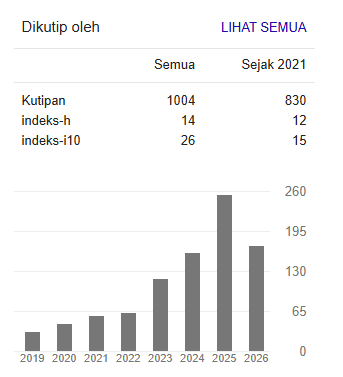
Google Scholar Citations
Journal Tools


Current Issue


Information
MAPS