Human Concept According to Mullā Ṣadrā and Its Contribution to the Modern Spiritual Crisis
DOI:
https://doi.org/10.20871/kpjipm.v12i1.558Keywords:
Ethics, Human, Islamic Philosophy, Mullā Ṣadrā, Substantial MovementAbstract
The background of this research departs from the reality of the humanitarian crisis in the modern era characterized by materialistic behavior, the decline of ethical values, and spiritual alienation. Previous studies of human philosophy have discussed many aspects of axiology and anthropology, but there is still a gap in offering a comprehensive philosophical-spiritual solution by referring specifically to the synthesis of Mullā Ṣadrā’s Islamic philosophy. The purpose of this article is to analyze the concept of human in the perspective of Mullā Ṣadrā’s Islamic philosophy and its contribution as a solution framework for the problem of contemporary spiritual crisis. This research uses a qualitative method with library research, focusing on the analysis of primary texts such as Ḥikmah al-Muta‘āliyah, and supported by related secondary sources. The results of the study indicate that humans in Mullā Ṣadrā’s view are dynamic entities consisting of the soul (nafs) and the body, where the soul undergoes a gradual process of existential perfection through substantial movement (al-ḥarakah al-jawhariyyah). The process of soul transformation towards perfection (al-insān al-kāmil) is carried out through soul cleansing (tazkiyah al-nafs), the acquisition of knowledge—especially metaphysical knowledge about God—and spiritual practice in the four spiritual journeys (al-asfār al-arba‘ah). The conclusion of the study confirms that Mullā Ṣadrā’s thoughts are not only relevant but also become an ontological foundation for an educational character that is able to overcome the spiritual crisis of the younger generation, so that it can function as an alternative solution in answering today’s existential problems.
Downloads
References
Abidin, Zainal. 2014. Filsafat Manusia: Memahami Manusia Melalui Filsafat. PT Remaja Rosdakarya.
Alavyfar, Mahdeih, and Abdolhamid Fallahnejad. 2018. “Revision of the Essence of Human Perfection in the Holy Quran, Through Philosophical Thoughts of Mulla Sadra.” Sadrā’i Wisdom 6 (2): 171–84.
Amoosoltani, Mohammadmahdi. 2025. “The Origin of the Soul in the Emergentist Perspective of Mulla Sadra.” European Journal of Science and Theology 21 (1): 119–38.
Ayun, Shofaa Qurrota, Afianti Istifarin, Achmad Dini Hidayatullah, and Badrus Soleh. 2024. “Indonesia’s Diplomatic Actions in the Israel-Palestine Conflict.” Jurnal Pertahanan: Media Informasi Tentang Kajian dan Strategi Pertahanan yang Mengedepankan Identity, Nasionalism dan Integrity 10 (2): 329–41. https://doi.org/10.33172/jp.v10i2.19605.
Baghirov, Ibrahim. 2024. “On the Origin of Human Souls: The Case of Ibn Sina (Avicenna) and Mullah Sadra (Sadraddin Shirazi).” Akademik Tarih ve Düşünce Dergisi 11 (5): 3575–85. https://doi.org/10.46868/atdd.2024.830.
Berkeley, George. 1998. A Treatise Concerning The Principles of Human Knowledge. Edited by Jonathan Dancy. Oxford University Press.
Bożek, Agnieszka, Paweł F. Nowak, and Mateusz Blukacz. 2020. ‘The Relationship Between Spirituality, Health-Related Behavior, and Psychological Well-Being’. Frontiers in Psychology 11 (August). https://doi.org/10.3389/fpsyg.2020.01997.
Deftarani, Deftarani, Faiq Dhiyaulhaq, and Rafli Nurochman. 2024. “Negative Impact of the Hedonism Lifestyle in the Student Environment.” Research and Innovation in Social Science Education Journal (RISSEJ) 2 (1): 35–39. https://doi.org/10.30595/rissej.v2i1.136.
Effendi, Rahmat. 2021. “Al-Asfar al-Arbaat Sebagai Basis Metafisika Mulla Shadra.” Tribakti: Jurnal Pemikiran Keislaman 32 (2): 333–52. https://doi.org/10.33367/tribakti.v32i2.1566.
Fārābī, Abī Naṣr. 1995. Arā’ Ahl al-Madīnah al-Faḍīlah wa Muḍādātihā. Edited by Alī bu Milḥem. Dār wa Maktabah al-Hilāl.
Gharawiyan, Mohsen. 2012. Pengantar Memahami Buku Daras Filsafat Islam. Translated by Muhammad Nur Djabir. Sadra Press.
Gubman, Boris. 2022. “Eurocentrism Past and Present.” The European Legacy 27 (6): 628–31. https://doi.org/10.1080/10848770.2022.2058744.
Halim, Aulia, and Fatmawati Moekahar. 2024. “The Phenomenon Hedonism On Instagram.” Proceedings International Conference on Communication and Media Digital 1 (1): 93–102.
Hasanuddin, and Khojir. 2023. “Pendidikan Menurut Filsafat Mulla Shadra (Sejarah Tokoh, Pemikiran dan Aliran):” Iqra: Jurnal Ilmu Kependidikan dan Keislaman 18 (1): 14–22. https://doi.org/10.56338/iqra.v18i1.3071.
Hinterberger, Thilo, and Nike Walter. 2025. ‘Spirituality and Mental Health – Investigating the Association between Spiritual Attitudes and Psychosomatic Treatment Outcomes’. Frontiers in Psychiatry 15 (January). https://doi.org/10.3389/fpsyt.2024.1497630.
Isham, Amy. 2024. “Materialistic Lifestyles as Facilitators of Environmental Violence: Can Flow Experiences Offer an Antidote?” In Exploring Environmental Violence: Perspectives, Experience, Expression, and Engagement, edited by Agustín Fuentes, John Paul Lederach, and Richard A. Marcantonio. Cambridge University Press. https://doi.org/10.1017/9781009417150.020.
Khademi, Hamid Reza, and Reza Hesari. 2025. “Kāshānī’s Impact on Mullā Ṣadrā’s Contribution to The Problem of Mental Existence: A Historical-Comparative Study.” Pizhūhish/Hā-Yi Falsafī- Kalāmī 27 (1): 137–66. https://doi.org/10.22091/jptr.2025.12801.3284.
Khair, Nurul. 2020. ‘Transformasi Insan Menurut Mulla Sadra: Membaca Konsep Dasar Insan Kamil Hikmah Muta’aliyah’. Baca Nurawala, October 23. https://baca.nuralwala.id/transformasi-insan-menurut-mulla-sadra-membaca-konsep-dasar-insan-kamil-hikmah-mutaaliyah/.
Khair, Nurul, and Hidayatul Qoriah. 2020. “Konsep Humanisme Spiritual Dalam Filsafat Mulla Sadra.” Kalimah: Jurnal Studi Agama dan Pemikiran Islam 18 (1): 51–64. https://doi.org/10.21111/klm.v18i1.4009.
Khair, Nurul, and Wa Ode Zainab Zilullah Toresano. 2020. “Insān Ilahī as The Main Concept of Mulla Sadra.” NALAR: Jurnal Peradaban dan Pemikiran Islam 4 (2): 92–105. https://doi.org/10.23971/njppi.v4i2.1927.
Khomaynī. 2006. Miṣbāḥ al-Hidāyah ilā al-Khilāfah wa al-Wilāyah. Mu’assasah al-‘Ālami li al-Maṭbu‘ah.
Lajnah Pentashihan Mushaf Al-Qur’an. 2019. Al-Qur’an dan Terjemahannya: Edisi Penyempurnaan. Lajnah Pentashihan Mushaf Al-Qur’an.
Leung, Chi Hung, and Hok Ko Pong. 2021. “Cross-Sectional Study of the Relationship between the Spiritual Wellbeing and Psychological Health among University Students.” PLOS ONE 16 (4): e0249702. https://doi.org/10.1371/journal.pone.0249702.
Malcolm, Noel, ed. 2014a. Thomas Hobbes: Leviathan. Vol. 2. Clarendon Edition of the Works of Thomas Hobbes. Oxford University Press.
Malcolm, Noel, ed. 2014b. Thomas Hobbes: Leviathan. Vol. 3. Clarendon Edition of the Works of Thomas Hobbes. Oxford University Press.
Mediano, Pedro A. M., Fernando E. Rosas, Daniel Bor, Anil K. Seth, and Adam B. Barrett. 2022. “The Strength of Weak Integrated Information Theory.” Trends in Cognitive Sciences 26 (8): 646–55. https://doi.org/10.1016/j.tics.2022.04.008.
Mohammed, Hassan H. 2025. “The Dynamic Soul: Mulla Sadra’s Philosophy of Consciousness through Essential Movement in Dialogue with Past and Present Perspectives.” Open Journal of Philosophy 15 (3): 707–21. https://doi.org/10.4236/ojpp.2025.153043.
Mousavian, Seyed N., and Seyed Hasan Saadat Mostafavi. 2017. “Avicenna on the Origination of the Human Soul.” Oxford Studies in Medieval Philosophy 5 (1): 41–86. https://doi.org/10.1093/oso/9780198806035.003.0002.
Mubarak, Ridho, Faisal Eriza, and Ahmad Sayyidulhaq Arrobbani Lubis. 2024. “Islamic Liberation in Human Responsibility as a Caliph on Earth.” Pharos Journal of Theology 105 (5) (2024): 1–11. https://doi.org/10.46222/pharosjot.105.512.
Mukhyi, Mohammad Abdul. 2023. Metodologi Penelitian Panduan Praktis Penelitian Yang Efektif. PT. Literasi Nusantara Abadi Grup.
Muthahhari, Murtadha. 2008. Fitrah: Menyingkap Hakikat, Potensi, dan Jati Diri Manusia. Translated by Afif Muhammad. Penerbit Lentera.
Muthahhari, Murtadha. 2023. Manusia Seutuhnya: Studi Kritis Atas Berbagai Pandangan Filsafat, Irfan, dan Teori Sosial Modern. Translated by Abdillah Hamid Ba’abud. Sadra Press.
Nasr, Seyyed Hossein. 1978. Sadr Al-Din Shirazi and His Transcendent Theosophy: Background, Life and Works. Imperial Iranian Academy of Philosophy.
Nasution, Abdul Fattah. 2023. Metode Penelitian Kualitatif. Harfa Creative.
Plato. 2000. The Republic. Edited by G. R. F. Ferrari. Translated by Tom Griffith. Cambridge University Press.
Pratomo, Dwi. 2017. “Mulla Sadra dan Transendensi Diri.” Ilmu Ushuluddin 4 (1): 47–64. https://doi.org/10.15408/iu.v4i1.15370.
Ramin, Farah. 2020. “Mullā Sadrā’s Doctrine of the Trans – Substantial Motion.” International Journal of Arts, Humanities & Social Science 1 (2): 27–36. https://doi.org/10.56734/ijahss.
Razi, Farid Mehrab. 2024. “An Analysis of Mulla Sadra’s Thoughts on the Soul in the Context of Modern Mental Health.” Journal on Islamic Studies 1 (3): 166–77. https://doi.org/10.35335/zazc2030.
Ritonga, Dedi Anton, and Muhammad Ichsan. 2025. “Hak Asasi Manusia (HAM) dalam Perspektif Islam dan Barat.” Politika Progresif : Jurnal Hukum, Politik dan Humaniora 2 (2): 193–204. https://doi.org/10.62383/progres.v2i2.1771.
Rosmarin, David H., Kenneth I. Pargament, and Harold G. Koenig. 2021. “Spirituality and Mental Health: Challenges and Opportunities.” The Lancet Psychiatry 8 (2): 92–93. https://doi.org/10.1016/S2215-0366(20)30048-1.
Shīrāzi, Ṣadr al-Dīn Muḥammad al-. 1990a. Al-Ḥikmah al-Muta‘āliyah fī al-Asfār al-‘Aqliyyah al-Arba‘ah. Vol. 1. Dār Iḥyā al-Turāth al-‘Arabī.
Shīrāzi, Ṣadr al-Dīn Muḥammad al-. 1990b. Al-Ḥikmah al-Muta‘āliyah fī al-Asfār al-‘Aqliyyah al-Arba‘ah. Vol. 8. Dār Iḥyā al-Turāth al-‘Arabī.
Shīrāzi, Ṣadr al-Dīn Muḥammad al-. 1990c. Al-Ḥikmah al-Muta‘āliyah fī al-Asfār al-‘Aqliyyah al-Arba‘ah. Vol. 9. Dār Iḥyā al-Turāth al-‘Arabī.
Suseno, Franz Magnis. 1987. Etika Dasar: Masalah-Masalah Pokok Filsafat Moral. PT Kanisius.
Syahir, Syafrida Hafni. 2021. Metodologi Penelitian. KBM Indonesia.
Ṭabāṭabā’ī, Muḥammad Ḥusayn al-. 2002. Bidāyah al-Ḥikmah. Mu’assasah al-Nashr Islāmī.
Ṭabāṭabā’ī, Muḥammad Ḥusayn al-, and ‘Abbās ‘Alī al-Zāri’ī al-Sabzwārī. 1998. Bidāyah al-Ḥikmah. Mu’assasah al-Ma‘ārif al-Islāmiyyah.
Tanjung, Idon, and Irfan Maulana. 2025. ‘Banjir Bandang Sumatera, Walhi Riau: Bukan Bencana Biasa, Ini Akibat Deforestasi Masif’. KOMPAS.Com. https://medan.kompas.com/read/2025/12/03/112012378/banjir-bandang-sumatera-walhi-riau-bukan-bencana-biasa-ini-akibat-deforestasi.
Tsani, Ahmad Firdaus, and Encung Encung. 2023. “Konsep Manusia Sempurna Mulla Sadra dan Fridriech William Nietzche.” El-Waroqoh: Jurnal Ushuluddin dan Filsafat 7 (2): 301–19. https://doi.org/10.28944/el-waroqoh.v7i2.1587.
Walid, Kholid Al. 2023. “Mullā Ṣadrā’s Criticism of Reincarnation.” Kanz Philosophia: A Journal for Islamic Philosophy and Mysticism 9 (1): 133–54. https://doi.org/10.20871/kpjipm.v9i1.274.
Warno, Nano. 2023. “Study Comparison on Knowledge by Presence in the Views of Ibn Sīnā, Suhrawardī, and Mullā Ṣadrā.” Kanz Philosophia: A Journal for Islamic Philosophy and Mysticism 9 (2): 333–52. https://doi.org/10.20871/kpjipm.v9i2.291.
Yarali, Batoul, Mohsen Fahim, and Mojtaba Jafari. 2023. “Free Will as a Fundamental Basis of Moral Action According to Mulla Sadra and Kant.” International Journal of Ethics and Society 5 (1): 13–19. https://doi.org/10.52547/ijethics.5.1.3.
Zalta, Edward N., ed. 2021. ‘Mulla Sadra’. In The Stanford Encyclopedia of Philosophy, Spring 2021. Metaphysics Research Lab, Stanford University. https://plato.stanford.edu/archives/spr2021/entries/mulla-sadra/.
Zamaniha, Hossein. 2022. “Mulla Sadra’s Four Journeys as the Four Levels of Self-Consciousness.” International Journal of Multicultural and Multireligious Understanding 9 (1): 132–38. https://doi.org/10.18415/ijmmu.v9i1.3244.
Zmigrod, Leor. 2022. ‘Individual-Level Cognitive and Personality Predictors of Ideological Worldviews: The Psychological Profiles of Political, Nationalistic, Dogmatic, Religious, and Extreme Believers’. Srgup_v1. Preprint, PsyArXiv, January 18. https://doi.org/10.31234/osf.io/srgup.
Zulihafnani, Zulihafnani, and Novita Putri. 2021. “Interpretasi Perintah Sujud pada Kisah Nabi Adam menurut Para Mufasir.” TAFSE: Journal of Qur’anic Studies 6 (2): 301–11. https://doi.org/10.22373/tafse.v6i2.10185.
Downloads
Published
How to Cite
Issue
Section
License
Copyright (c) 2026 Ali Ridho Imansyah

This work is licensed under a Creative Commons Attribution 4.0 International License.


Evaluation Progress Scopus

CITEDNESS IN SCOPUS

Sinta

Article Template

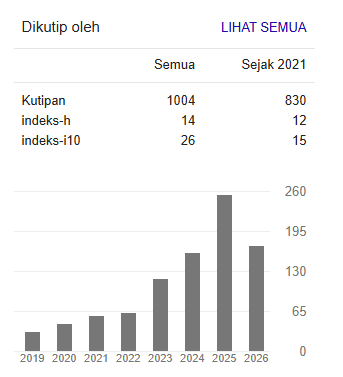
Google Scholar Citations
Journal Tools


Current Issue


Information
MAPS